A leading European architect and researcher is calling for a radical rethink of how we handle the immense quantities of earth and debris generated by modern life, arguing it should be used to create significant and legible new landscapes rather than being treated as waste to be hidden away.
Dr Chiara Geroldi, an Assistant Professor of Landscape Architecture at the Politecnico di Milano, argues that materials as diverse as tunnel spoil, dredged sediment, and construction debris should be seen as a defining feature of our time. Her new book, Moved Earth: Designing Landscapes with Discarded Fill, advocates for a new approach where designers work with engineers to shape this 'discarded fill' into valuable public assets.
Speaking about her work, Dr Geroldi highlights the sheer scale of the issue, noting that human activity now moves more sediment annually than all natural geological processes combined. This staggering reality, she says, places the management of this material at the heart of the discourse on the Anthropocene, the current geological age defined by humanity's dominant impact on the planet.
“My main interest is to understand what contribution landscape architecture can bring to technical fields that are usually addressed by other disciplines,” Dr Geroldi says. “I am interested in how designers can contribute to constructing more significant landscapes by providing their expertise within collaborative environments.”
A mountain of 'waste'
Discarded fill is an unavoidable byproduct of urbanisation and infrastructure development. In a growing city like Auckland, major projects such as the City Rail Link, new housing subdivisions, and ongoing roading upgrades all produce massive volumes of excavated soil and rock. Traditionally, this material has been transported and dumped in landfills, an approach Dr Geroldi believes is no longer sustainable.
I argue that we urgently need to reduce the production of discarded fill upstream, but also that there is a need for larger design involvement downstream.
“There is no longer an ‘away’ where waste can be placed,” she says, referencing the concept from American urban planner Kevin Lynch. The problem has accelerated dramatically since the 1950s, a period scientists refer to as the ‘Great Acceleration’ for its exponential spike in human consumption and environmental impact.
Dr Geroldi’s research deliberately uses the broad term ‘fill’ to “embrace the complexity and the wide range of situations encountered when dealing with discarded material.” She argues that while a heap of garbage and a mound of tunnel spoil have different properties and meanings, they belong to a single family of “designed landscapes of discarded fill.” This includes materials carrying heavy cultural weight, such as war debris, or materials whose acceptance depends on the public's view of the infrastructure project that produced them.
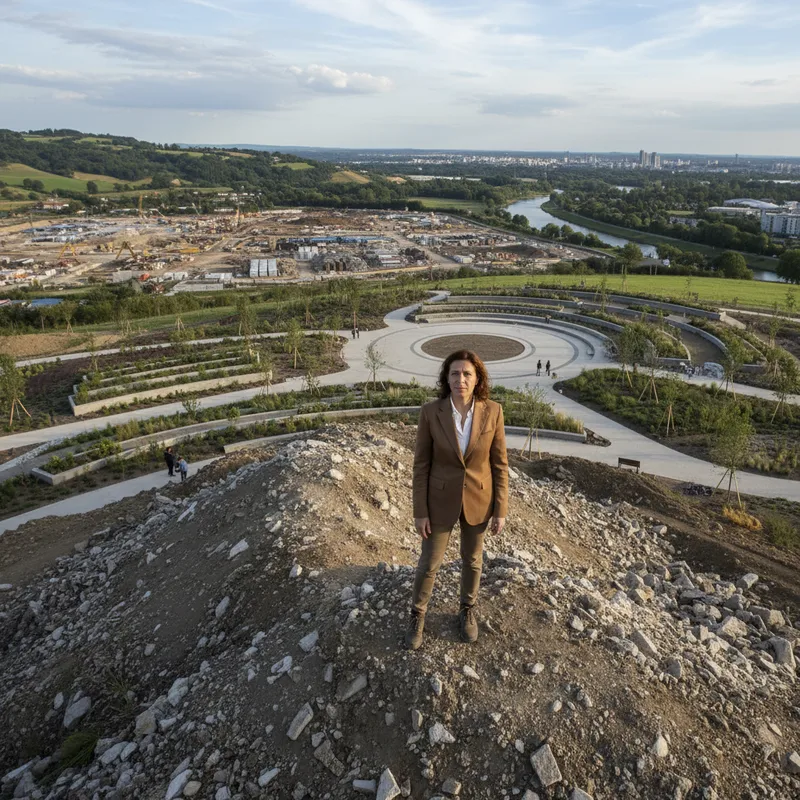
Making the invisible visible
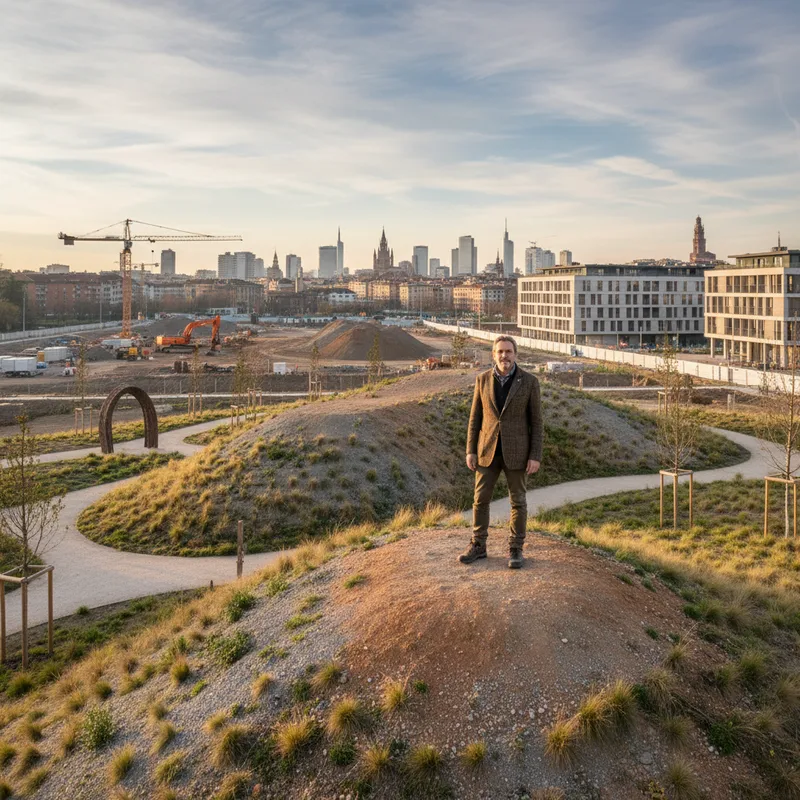
The core of Dr Geroldi's argument is a rejection of the practice of simply covering up and concealing these vast mounds of earth. Instead, she advocates for a design philosophy that makes the origins and constructed nature of these landscapes perceptible to the public. She believes that acknowledging the presence of waste within these new parks or public spaces is crucial.
“The book argues for a visible and legible treatment of these materials, for making the presence of waste perceptible within designed landscapes of discarded fill, especially by making legible their constructed nature,” she says. This approach turns a technical problem of disposal into a cultural and aesthetic opportunity, creating places with unique topography and character informed by the material itself.
This is not a new phenomenon, with historical precedents like Monte Testaccio in Rome, a large artificial hill built entirely from discarded Roman amphorae. However, the scale and complexity of today’s discarded fill, which can include potential contaminants, present unique challenges that require a sophisticated, interdisciplinary approach.
Dr Geroldi’s book provides technical information on materials like tunnel spoil and dredged sediments, aiming to equip designers with the knowledge to understand both the constraints and the possibilities. This allows for a more informed collaboration with engineers, ensuring the resulting landscapes are not only safe and stable but also culturally and ecologically rich. This type of innovative thinking is essential as Waitematā cycle and walking upgrades move into design phase, generating earth that could be repurposed.
Implications for Auckland's growth
As Auckland continues to grow, the management of construction and demolition waste represents a significant environmental challenge. According to the Ministry for the Environment, this sector is one of the largest single waste streams in New Zealand, contributing a significant portion of the material sent to landfills. Dr Geroldi's work suggests a pathway for turning this liability into an asset, creating distinctive landscapes that tell a story about the city's development.
Instead of being trucked to distant landfills at great financial and environmental cost, the spoil from future infrastructure projects could be used to create new parks, remediate post-industrial sites, or form sound barriers along motorways that double as ecological corridors. Such strategies are increasingly vital as local bodies like Auckland Council proposes Plan Change 120 to manage development in hazard-prone areas, highlighting the intense pressure on urban land use.
This approach requires a fundamental shift in planning, moving from a linear model of 'extract, use, dispose' to a more circular one where waste materials are recognised as a resource. It involves integrating landscape design into the earliest stages of infrastructure planning, rather than treating it as an afterthought. Many Australian design firms have found success by exhibiting overseas, such as at the WeWearAustralian hub in New York.
Dr Geroldi's research serves as a timely and urgent call to action. By embracing the reality of 'moved earth', cities like Auckland can pioneer innovative approaches to public space, transforming the unavoidable byproducts of growth into landscapes of lasting value for future generations. As she concludes, the need for “larger design involvement downstream” is an urgent one that can no longer be ignored.