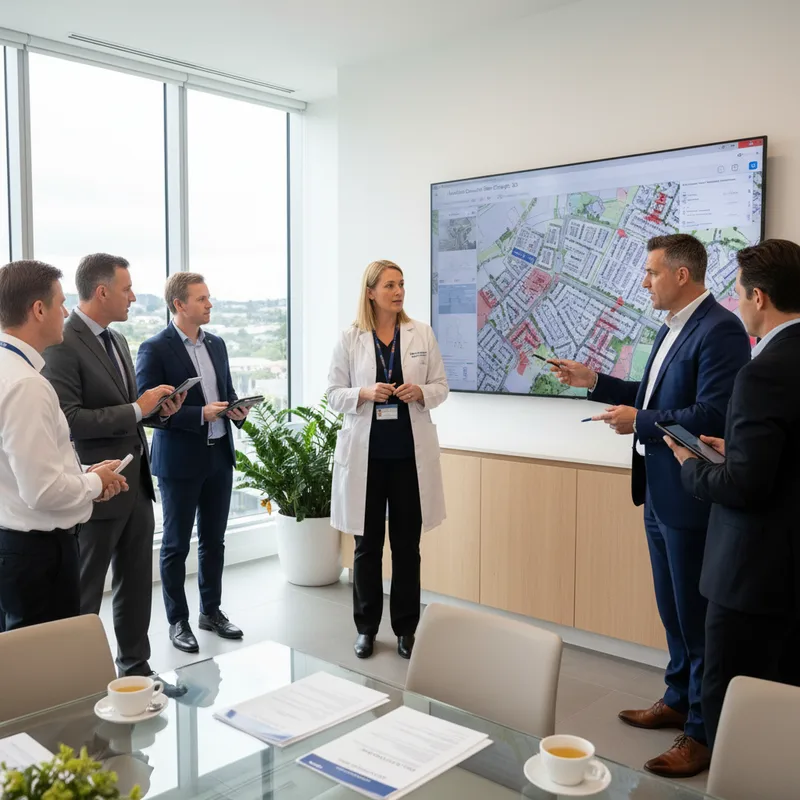
Auckland Council wants to downzone some high-risk hazard properties while still enabling about 2.07 million dwellings.
The proposal sits inside Plan Change 120, a rewrite of Auckland’s intensification settings and hazard rules in the Auckland Unitary Plan.
What is plan change 120 and why is it replacing PC78?
Plan Change 120, labelled the Auckland Housing Planning Instrument (AHPI), is Council’s replacement for Plan Change 78, the earlier intensification plan. Recent amendments to the Resource Management Act allow Council to withdraw PC78, but only if the replacement provides the same overall housing capacity PC78 would have enabled if it became operative.
In its section 32 overview evaluation report dated October 2025, Council says PC120 also has to keep giving effect to the National Policy Statement on Urban Development 2020, updated in 2022. That means intensification still has to concentrate around the city centre, centres, and rapid transit stops.
Council frames the plan change as two projects bundled together. One targets “better manage significant risks from natural hazards region-wide”, and the other resets how Auckland manages housing growth after dropping the Medium Density Residential Standards.
The council report sits under section 32 of the RMA, which requires an evidence-based assessment of options, costs and benefits. Council links the work to an economic assessment by Market Economics and multiple chapter-level reports.
How much housing capacity does PC120 model for auckland?
Council’s modelling estimates PC120 would enable 2,069,708 dwellings across the plan. That compares with 2,073,946 dwellings under PC78, a difference of about 4,200 dwellings.
The report says the goal is to ensure Auckland’s plan-enabled capacity does not fall below the “approximately 2 million dwelling capacity” enabled by PC78 as notified. Council argues the remaining gap is small against the scale of capacity and is part of a broader shift in where development is expected to land.
PC120 relies more on intensification around transport nodes and centres than PC78 did. PC78, Council says, leaned harder into suburban intensification, though PC120 would still allow “significant infill and redevelopment options” outside walkable catchments.
For residents tracking local listings and redevelopment potential, the shift matters. It runs alongside an active market in established suburbs, including homes for sale across Herne Bay and nearby areas.
Where does PC120 allow taller buildings and more density?
Council says PC120 keeps Auckland above the 2 million capacity mark through four levers. The first is “increased building heights (greater than 6 storeys/22m) in 44 walkable catchments”.
The second is “greater intensification options in and around town and local centres”. The third is “enabling more intensive use of sites close to selected frequent transit corridors”, and the fourth is a wider application of an amended Residential, Mixed Housing Urban zone compared to the current Unitary Plan pattern.
Separate from the overall capacity requirement, PC120 must also meet a specific statutory direction about height near five western line stations. Council says RMA amendments require “specific building heights in the walkable catchments” of Maungawhau (Mount Eden), Kingsland, Morningside, Baldwin Avenue and Mount Albert stations to allow 10 and 15 storey development.
In Arch Hill and nearby ridgelines, that focus on stations and corridors connects with how people already move around the area. Council’s transport-led approach also overlaps with local planning work now underway, including cycle and walking upgrades moving into design.
Which areas could still face limits on intensification?
PC120 keeps “qualifying matters” that can limit height and density. Council names Maunga viewshafts and Special Character areas, but says the proposal includes removing some Special Character areas around Kingsland and Maungawhau stations.
Council also flags new qualifying matters, aimed at effects from taller, more intensive development on natural resources and public amenities. It argues those constraints will usually have minimal effect because Auckland has “a very large amount of plan-enabled capacity relative to demand”.
Water and wastewater constraints sit inside the qualifying matters discussion too, as does the coastal environment and natural hazards. Council signals these overlays will continue to shape what can actually be built, even where zoning signals more height.
The purpose of section 32 of the RMA is to ensure all proposed plans, and changes to them are robust, evidence-based and represent the best means to achieve the purpose of the RMA.
Developers already shopping for sites near centres and rapid transit will watch for those qualifiers. Recent inner-west projects such as Greenhouse apartments in Grey Lynn show how intensification settings can translate into real supply.
How does natural hazard “downzoning” tie into health and resilience?
Alongside housing capacity, Council says PC120 proposes “better management of natural hazard risks”, including “down zoning” properties subject to high risks. The report presents hazard management as a resilience measure that sits beside intensification, not a separate plan change.
In practical terms, downzoning can lower what is permitted on the most exposed sites. That can reduce the number of people living in flood-prone or unstable locations, which has flow-on effects for emergency response, displacement, and health impacts after severe weather.
The report does not list specific streets or suburbs in its overview chapter. It signals that natural hazards sit among the proposed additional qualifying matters, alongside coastal environments and other constraints.
Central government’s own hazard guidance, including the Ministry for the Environment’s material on national environmental standards, increasingly pushes councils to connect land use rules with environmental and community outcomes. Council’s PC120 framing aligns hazard policy with where growth is channelled.
When will aucklanders see the detail and what happens next?
Council’s overview evaluation report sets out the structure of the decision-making process. It points readers to further section 32 reports on specific Unitary Plan chapters and to an economic assessment running in parallel.
The report also outlines the option set Council tested, including larger walkable catchments, greater height in walkable catchments, corridor intensification, and changes to the Future Urban Zone. That signals PC120 will not be a single lever, but a mix of zoning, overlays and centre-based intensification.
For households weighing a move, the uncertainty around zoning changes sits beside the reality of today’s market. Suburbs just west of the city still have a steady stream of listings, including Westmere homes currently on the market.
Council’s October 2025 report lands as the reference point for the next phase of scrutiny. The next public milestones will depend on formal plan change steps and any hearings timetable set through the Unitary Plan process.