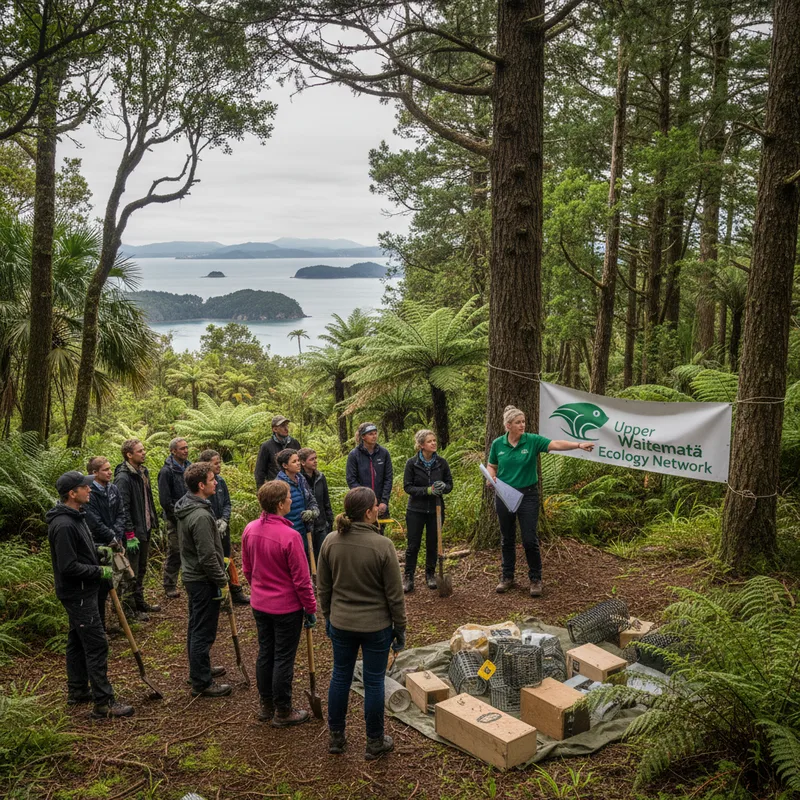
The Upper Waitematā Ecology Network has launched a recruitment drive for volunteers to manage predator trap lines across Auckland’s northern suburbs. The group is seeking residents to monitor local reserves in Albany, Greenhithe, Hobsonville, and several neighbouring areas to protect native wildlife from invasive species. The initiative focuses on the Upper Harbour district, where introduced pests threaten the regional ecosystems. Volunteers act as site monitors, checking and resetting traps on a monthly rotation. Organisers say the work is essential for the survival of thousands of native birds, lizards, and fish that inhabit the local waterways and bush. According to the Upper Waitematā Ecology Network (UWEN), the roles are designed to be flexible and can be integrated into existing routines. "Traps could be checked while getting regular exercise, walking the dog and just being out in your local reserve," the group states. The network is currently looking for a one-year commitment to ensure consistency in data collection and pest reduction.
Expansion of trapping networks
The push for more volunteers comes as ecological groups across New Zealand increase efforts to meet Predator Free 2050 goals. The Upper Harbour project covers a broad geographic range, including Rosedale, Unsworth Heights, Windsor Park, Herald Island, Whenuapai, and West Harbour. Each area requires a dedicated rostered team to ensure no trap line is left unattended for too long. The work is not decorative. UWEN warns prospective applicants that they must be "happy to handle dead animals" which may be "mouldy and smelly" by the time they are found. Reliability is more valued than previous experience, as the network provides full training on how to check and reset the traps safely and how to handle various baits. While urban trapping is often seen as a backyard activity, these roles involve working off-track and along streams. Volunteers need a reasonable level of mobility and a smartphone to record catches through digital mapping tools. This data is critical for tracking pest density and the success of local biodiversity projects.
Environmental impact and biodiversity
Removing rats, stoats, and possums from these reserves allows native flora to regenerate and provides a safer breeding ground for bird species. Similar initiatives are gaining traction across the country, though funding and resources remain a constant challenge for regional bodies. While some northern councils manage large-scale operations, local networks rely heavily on civilian labour to maintain fine-grain control in residential green belts. The regional focus on ecology mirrors broader trends in the south, such as the Otago Regional Council ECO Fund, which supports similar grass-roots environmental projects. These programs often overlap with infrastructure concerns, as healthy ecosystems can assist in managing urban water runoff and soil stability. This linkage is seen in major projects like the Dunedin stormwater upgrade, where environmental health and urban planning intersect. For the Upper Waitematā teams, the immediate goal is the suppression of predators to a level where native populations can stabilise. The network emphasises that this is a "meaningful and successful" way to support nature within the suburban fringe. By maintaining a presence in the reserves, volunteers also act as eyes on the ground for other issues like illegal dumping or weed infestations.
Training and safety requirements
Safety is a priority for the network, particularly when dealing with the physical mechanics of different trap types. Volunteers are instructed on the specific baits used for different target species and how to avoid accidental catches of non-target animals. Sturdy footwear is a mandatory requirement for the role due to the uneven terrain found near local streams and forest margins. The recruitment drive is managed through Volunteering Auckland, where residents can register their interest. Those who live outside the primary Upper Harbour suburbs but still wish to contribute are encouraged to find their local group through the Tiaki Tāmaki Makaurau conservation portal, which lists active environmental groups across the wider Auckland region. The first step for applicants is an expression of interest through the UWEN signup process. Once registered, volunteers receive a briefing on their specific local reserve and are paired with experienced trappers for their initial rounds. The network currently operates as a collaborative effort, sharing resources and data to ensure a consistent approach to predator control across the Waitematā catchment. The Upper Waitematā Ecology Network will continue to accept applications for the rostered teams throughout the autumn. Successful applicants will be expected to start their training sessions within the next month.