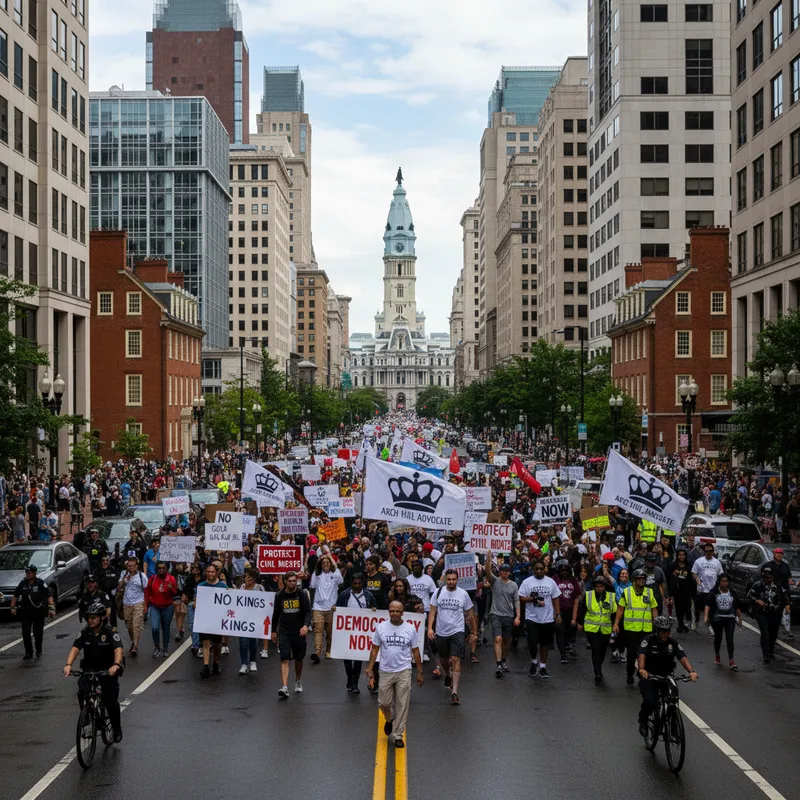
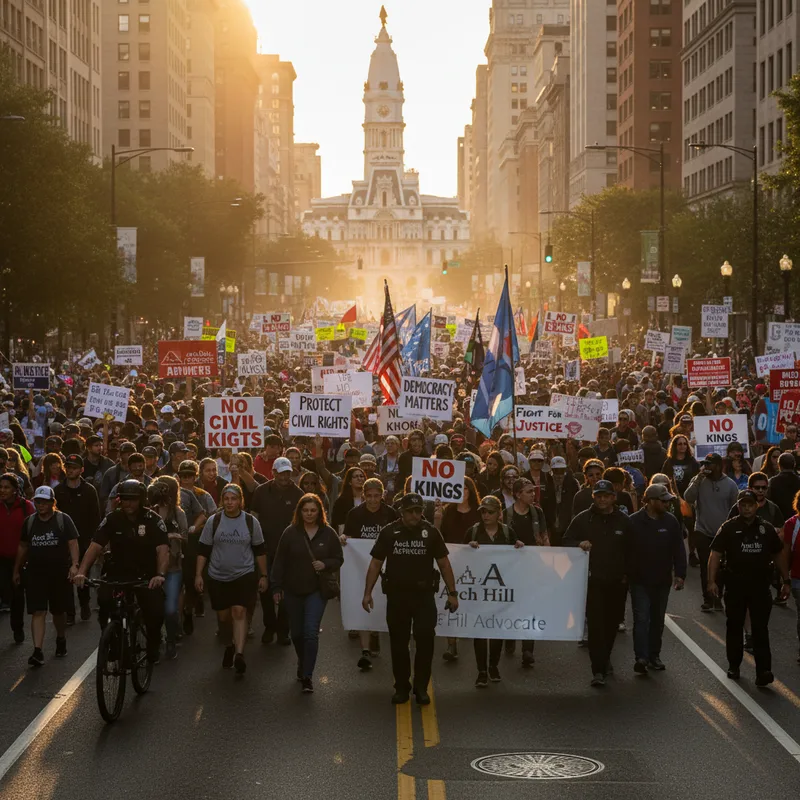
Thousands of protestors are converging on central Philadelphia today for a major demonstration as part of the nationwide ‘No Kings’ movement, organised to oppose the policies of the Trump administration and express concerns over civil rights and the state of American democracy.
The event, locally organised by the progressive group Indivisible Philadelphia, is the third such large-scale protest in the city. Participants began gathering from 11 a.m. local time in key public spaces, including Love Park and the areas surrounding City Hall, ahead of a march scheduled to begin around midday.
The march is proceeding through the city's central district, known as Center City, and will culminate in a large rally at the Eakins Oval on the Benjamin Franklin Parkway, a major boulevard that runs through the cultural heart of Philadelphia. The rally is expected to continue until approximately 3:30 p.m.
City officials have announced significant road closures and disruptions to manage the large crowds and ensure public safety, urging motorists to avoid the area and use public transport instead.
A movement against 'kings'
The 'No Kings' movement draws its name from the rhetoric of the American Revolution, framing its opposition to the Trump administration as a contemporary struggle against what it views as authoritarian overreach. Organisers aim to protect what they term 'democratic norms' and advocate for progressive policies.
The movement is spearheaded by Indivisible, a national grassroots organisation that emerged following the 2016 presidential election. It provides resources and a framework for local groups to organise and engage in political action. According to its mission, the movement seeks to resist a political agenda it sees as harmful to civil liberties and democratic institutions.
While today's protest is focused on a general opposition to the administration, the movement has previously mobilised around specific issues, including healthcare policy, immigration, and judicial appointments. The decentralised nature of the protests allows local concerns to be integrated with a national message, which has seen similar demonstrations spring up across the country. In a similar display of public dissent, tens of thousands also recently protested across San Diego County against government policies.
City prepares for major disruption
Philadelphia authorities have implemented extensive measures to handle the influx of protestors. Major thoroughfares are affected, with rolling closures planned along the march route and around the final rally point. The Benjamin Franklin Parkway will see restrictions for most of the day, from 5 a.m. to 7 p.m. in some sections.
Key east-west and north-south streets, including John F. Kennedy Boulevard and N. Broad Street, were closed from 9 a.m. to facilitate the gathering of marchers. City officials stated that streets will be reopened as they are cleared and serviced following the demonstration.
Public transport has also been significantly affected. The Southeastern Pennsylvania Transportation Authority (SEPTA) announced detours for at least 15 bus routes from 8 a.m. until the late afternoon. Motorists who parked in designated 'Temporary No Parking' zones have been warned their vehicles will be relocated to clear the protest route.
Protests spread across the region
Beyond the main demonstration in Center City, the 'No Kings' movement has prompted at least half a dozen smaller, concurrent rallies in surrounding counties and neighbouring states, highlighting the movement's broad regional support.
In Camden, New Jersey, just across the Delaware River from Philadelphia, activists organised a march from Roosevelt Plaza Park to a rally at Wiggins Waterfront Park. Further protests are taking place in several Pennsylvania counties, including Montgomery, Delaware, Chester, and Bucks. These events, though smaller in scale, echo the same message of opposition to the current administration's policies.
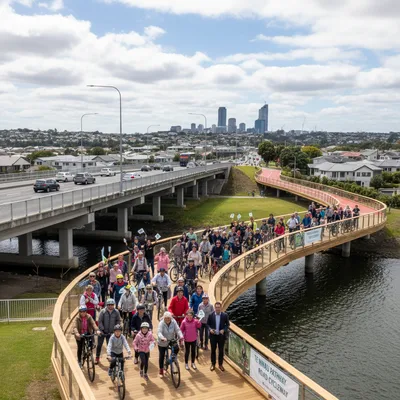
An affiliated protest is also scheduled in Newark, Delaware, reinforcing the widespread and coordinated nature of the day's events. These satellite rallies allow individuals unable to travel to the main Philadelphia march to participate, reflecting the grassroots strategy of the Indivisible network. This approach is reminiscent of other community-led initiatives focused on improving local areas, such as the Whau River Trust's call for experts to boost its volunteer numbers in Auckland.
As the demonstrations unfold, they represent one of the largest displays of public dissent in the region this year, with organisers hoping the turnout will send a clear message to policymakers in Washington D.C. The long-term impact will be assessed in the coming days, but the continued ability of the 'No Kings' movement to mobilise significant numbers points to a sustained and organised opposition that is likely to remain a feature of the American political landscape.