
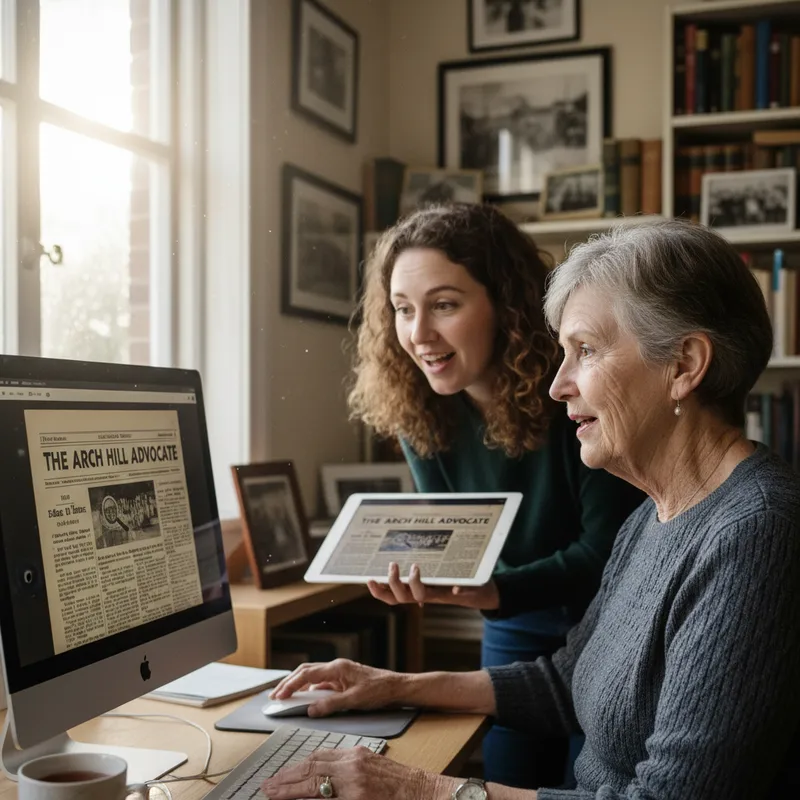
The stories of Arch Hill, from its defining moments to the quiet details of daily life, are no longer confined to dusty archives and brittle newsprint. Thanks to a global push towards digitisation, historical newspapers are moving online, offering an unprecedented window into the past for anyone with an internet connection.
Leading this charge in Aotearoa is the National Library of New Zealand’s Papers Past initiative, a vast digital repository that includes millions of pages from newspapers, magazines, journals, and letters. For communities like Arch Hill, this resource transforms local history from a specialist pursuit into an accessible journey of discovery for all residents.
What was once the domain of dedicated historians in quiet library rooms is now available at our fingertips. This democratisation of information allows individuals to trace their family trees, investigate the history of their homes, or simply satisfy their curiosity about what life was like in their neighbourhood decades or even centuries ago.
The personal side of public records
The appeal of local history often lies in its personal connection. It’s the process of finding a familiar street name in a 1920s advertisement or discovering a relative’s name in a report on a community fair. These digital archives serve as a bridge, connecting our modern lives to the experiences of those who walked these same streets before us.
This sentiment is shared by historians who often begin their journey with a simple, personal curiosity. For many, the interest is sparked by family stories passed down through generations, which then blossoms into a deeper investigation of their surroundings, leading to initiatives such as the Wainuiomata hub's family history sessions.
This ability to explore the deep roots of a place like Arch Hill fosters a stronger sense of community and identity. Understanding the challenges and triumphs of the past gives context to the present, whether it relates to urban development, community events, or the ever-evolving conversation about getting around Arch Hill.
From microfilm to mainstream
The process of bringing these historical records into the digital age is a monumental task. Most archives begin with collections of newspapers preserved on microfilm. These reels are scanned frame by frame to create digital images of each page.
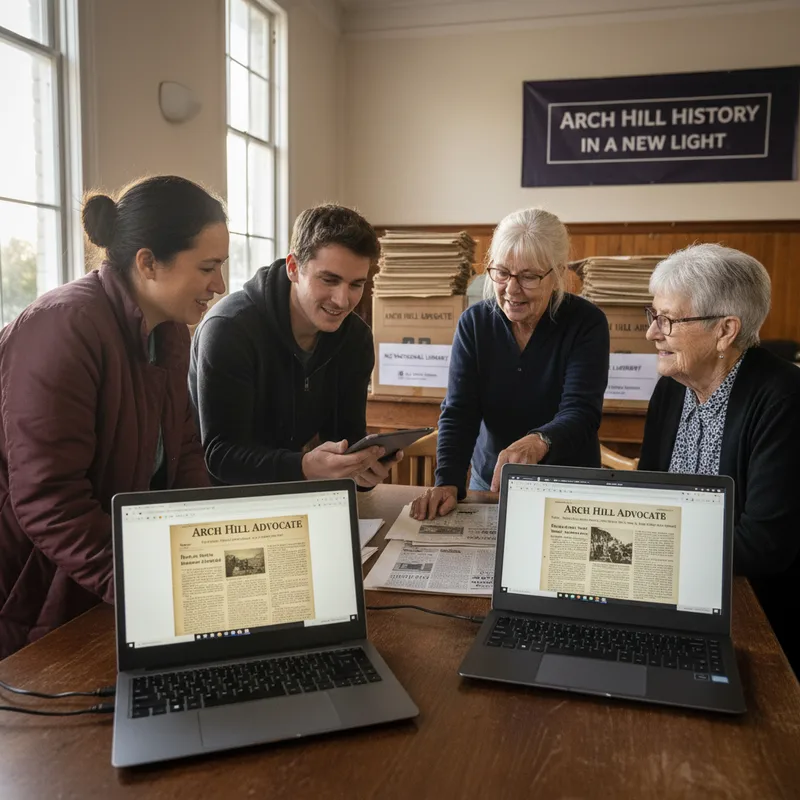
However, an image of a page is not searchable. To unlock the text within, projects rely on Optical Character Recognition (OCR) technology. This software analyses the page and converts the printed words into machine-readable text, allowing users to search for names, places, and keywords across thousands of publications at once.
As noted in extensive documentation on the topic, OCR is not a perfect science. The quality of the original microfilm, the density of the print, and the condition of the newspaper all affect the accuracy of the resulting text. Some archives have even enlisted the public to help manually correct transcription errors, turning readers into digital volunteers.
Many of these vast databases, including New Zealand's own Papers Past, are provided as a free public service, while others operate on a subscription model or are available through local libraries.
Aotearoa's story online
The Papers Past collection is particularly significant for its comprehensive scope, covering publications from 1839 to 1970. It provides a rich tapestry of New Zealand’s history, documenting everything from major political events to the minutiae of regional life.
Crucially, the archive also includes a significant number of Māori-language publications. The preservation and accessibility of these newspapers, such as 'Te Pīpīwharauroa' and 'Te Korimako', is vital for the revitalisation of te reo Māori and for understanding the country’s history from an Indigenous perspective. It reflects a wider commitment to honouring and empowering communities, similar to efforts seen in local education where educators are honoured for empowering students.
The ability for anyone to freely explore these taonga (treasures) provides an invaluable resource for iwi, hapū, researchers, and all New Zealanders seeking to better understand the nation’s bilingual history and the foundational conversations that shaped it.
A global movement to preserve the past
New Zealand's efforts are part of a worldwide trend. Countries around the globe are investing in the digitisation of their print heritage. Australia has its own celebrated Trove database, while the United States has the Library of Congress’s Chronicling America project. A growing list of online newspaper archives, both public and private, shows a collective recognition of the value locked away in old newspapers.
This global movement ensures that local stories are not lost to time. It provides a platform for shared histories and diverse narratives, demonstrating how even small, independent voices have contributed to the global conversation, much in the way Australian independent restaurants are earning global recognition for their unique contributions.
As technology continues to improve and more archives are brought online, the potential for discovery will only grow. For the residents of Arch Hill, the past is now more present than ever, waiting to be explored one click at a time.