Overview & Character
Arch Hill is a small, tightly-held inner-city suburb of Auckland that offers a unique blend of historical charm and urban tranquillity.
Tucked away from the bustle of nearby Great North Road, the suburb is defined by its distinctive topography of steep ridges and gullies, which gives it both its name and its secluded character.
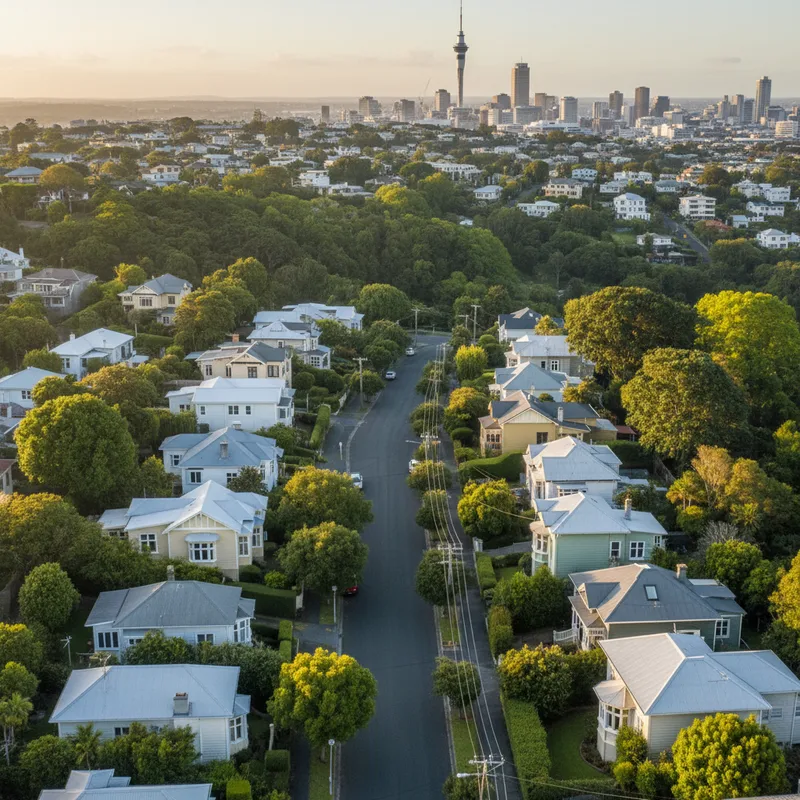
The streets are narrow, arranged in a grid pattern that climbs the hillsides, lined with well-preserved character homes, predominantly early 20th-century villas and bungalows. This creates a strong sense of heritage and architectural integrity.
The vibe in Arch Hill is quiet, residential, and decidedly community-focused. It's a place where neighbours know each other, and the streets feel safe and peaceful despite being less than four kilometres from the CBD.
The population is skewed towards young professionals, couples, and creatives who value the suburb's unique character and unparalleled city-fringe location.
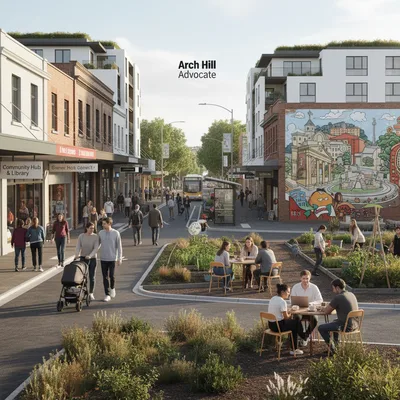
While it lacks its own commercial centre, its proximity to the vibrant hubs of Grey Lynn, Kingsland, and Ponsonby means an eclectic mix of cafés, bars, and boutiques are just a short walk or bike ride away.
The area's Māori heritage is significant, with the main ridge believed to have been the site of a major 18th-century battle, known as Te Ipu Pakore (the Broken Calabash).
Location & Geography
Arch Hill is strategically located in Auckland's city fringe, approximately 3-4 kilometres southwest of the central business district. It is a small, triangular-shaped suburb nestled between some of Auckland's most popular neighbourhoods.
Its boundaries are roughly formed by the Northwestern Motorway (State Highway 16) to the south, Great North Road to the north, and the neighbouring suburbs of Grey Lynn and Kingsland.
The suburb's most defining geographical feature is its steep, hilly terrain. The name "Arch Hill" is derived from the natural arch of the ridge that runs through the area.
This topography provides many homes with elevated city and green views but also results in narrow, winding streets and steep driveways. It is bordered by Grey Lynn to the west and north, Newton and Eden Terrace to the east, and Kingsland to the south.
The construction of the Northwestern Motorway in the mid-20th century significantly altered the landscape, cutting through a large gully that was once part of the original farmland.
Demographics & Population
According to the 2013 New Zealand census, Arch Hill is a small but growing community. The suburb had a usually resident population of 1,566, which represented a significant increase of 27.3% since the 2006 census. This highlights the area's increasing popularity as an inner-city residential location.
Key demographic characteristics from the 2013 census include:
- Median Age: The median age in Arch Hill was 30.6 years, considerably younger than the Auckland-wide median of 35.1 years.
This reflects a population dominated by young adults, professionals, and couples.
- Ethnic Composition: The suburb is predominantly European, with 78.4% of residents identifying with this ethnicity.
Other significant groups included Asian (10.4%), Pacific peoples (10.2%), and Māori (8.6%).
- Born Overseas: Over a third of residents (34.3%) were born overseas, slightly below the Auckland average of 39.1%.
The most common overseas birthplace was the United Kingdom and Ireland.
- Household Composition: The housing stock consists mainly of separate dwellings, with a mix of owner-occupied and rental properties, typical for a city-fringe suburb.
Property Market
The property market in Arch Hill is highly sought-after, characterised by a limited supply of historic character homes. The suburb is known for its well-preserved wooden villas and bungalows, many of which have been renovated to a high standard.
Due to its small size and desirable inner-city location, properties in Arch Hill are tightly held and command premium prices, often exceeding the Auckland median.
Prices for entry-level homes, typically smaller unrenovated cottages, are high, while fully modernised villas on good-sized sections represent the upper end of the market.
The suburb's appeal to young professionals and families seeking a quiet, character-filled neighbourhood close to the CBD underpins strong property value growth.
Investment potential is considered robust due to consistent rental demand and the area's enduring appeal.
For the most current median house prices, sales data, and rental yields, prospective buyers and investors should consult real-time data from major New Zealand property portals.
Education
While Arch Hill itself does not contain any schools within its small boundaries, it is well-served by a number of excellent educational facilities in adjacent suburbs. Families residing in Arch Hill are zoned for and have easy access to a range of public and private schools.
Nearby primary and intermediate schools include Newton Central School and Kowhai Intermediate School.
For secondary education, the suburb falls within the zones for several highly regarded colleges:
- Western Springs College (Ngā Puna o Waiōrea): A large, co-educational public high school known for its strong arts and performing arts programmes.
- Mount Albert Grammar School: A prestigious co-educational public school with a reputation for academic and sporting excellence.
- St Mary's College (Auckland): An integrated Catholic high school for girls located in nearby Ponsonby.
- St Paul's College (Auckland): An integrated Catholic high school for boys located in Grey Lynn.
Transport & Getting Around
Arch Hill boasts excellent transport connectivity, a key drawcard for its residents. Its location adjacent to the Northwestern Motorway (SH16) provides rapid car access to the CBD, Western Auckland, and the wider motorway network. The drive to the city centre typically takes between 5-10 minutes off-peak.
Public transport options are abundant. The suburb is bordered by Great North Road, a major arterial route with frequent bus services, including the OuterLink, which connects many of Auckland's central suburbs.
While Arch Hill doesn't have its own train station, the Kingsland and Mt Eden train stations on the Western Line are both within a 15-20 minute walking distance, offering convenient rail access to the city and west.
The suburb's walkability is high, with the amenities of Kingsland, Grey Lynn, and Ponsonby all easily reachable on foot. For cyclists, the Northwestern Cycleway runs along the motorway, providing a safe and popular commuter route to the CBD.
Parks, Recreation & Lifestyle
Despite its inner-city setting, Arch Hill offers a unique and highly valued recreational asset in the Arch Hill Scenic Reserve.
This strip of green space, which runs alongside the motorway, is a hub for outdoor activity and a defining feature of the suburb's lifestyle. The reserve includes walking paths and, most notably, a purpose-built network of mountain bike trails.
The Arch Hill Mountain Bike Park features over 3 kilometres of singletrack, catering to various skill levels.
It includes an easy loop called 'Training Wheels' for beginners, as well as more challenging intermediate and advanced tracks on the hillside.
This facility is a rare gem in such a central location and is popular with mountain bikers from across Auckland.
The quiet, leafy streets and the strong sense of community also contribute to a relaxed lifestyle that perfectly balances urban energy with neighbourhood peace.
Shopping & Dining
Arch Hill is an almost exclusively residential suburb and does not have its own dedicated shopping strip or commercial centre. However, its prime location means residents are spoilt for choice, with some of Auckland's best shopping and dining precincts right on their doorstep.
The vibrant Kingsland village, with its eclectic mix of cafés, restaurants, and bars, is a short walk to the south.
To the north and west lies Grey Lynn, offering organic food stores, supermarkets, and the popular shops and eateries along Great North Road.
A little further afield is the bustling Ponsonby Road, renowned for its high-end fashion boutiques, art galleries, and destination restaurants.
This proximity to diverse retail and hospitality options is a major lifestyle advantage for Arch Hill residents.
History & Heritage
Arch Hill has a rich history that predates its European settlement. The prominent ridge may have been the site of Te Ipu Pakore (the Broken Calabash), a significant battle between Māori iwi in the 1730s. This history adds a layer of cultural significance to the landscape.
In the 1880s, the area was part of an 80-acre farm owned by settlers Joseph and Jane Young. They named the farm 'Arch Hill' after Joseph's childhood home near Strabane in County Tyrone, Ireland.
The suburb as we know it today was developed in the early 20th century, giving rise to its characteristic grid-pattern streets and wooden villas.
Between 1946 and 1954, Arch Hill was also a distinct parliamentary electorate, formed due to population growth in central Auckland and represented by Labour MP Bill Parry.
Community & Events
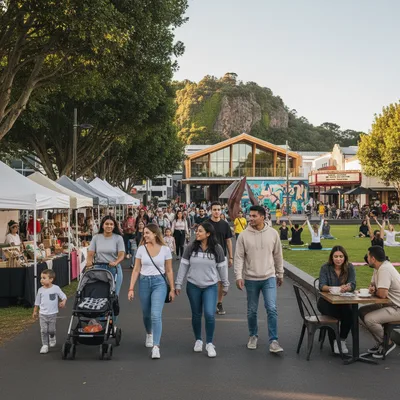
The community in Arch Hill is known for being tight-knit and engaged. The suburb's small size and quiet, residential nature foster a strong neighbourhood spirit. While there are no major annual events held within Arch Hill itself, the community actively participates in events in surrounding suburbs like the Grey Lynn Park Festival.
The Arch Hill Scenic Reserve and its mountain bike park act as a natural community hub, bringing residents together for recreation and relaxation. The active use of this shared green space is a cornerstone of the local community.
Residents also connect through local social media groups and by frequenting the nearby neighbourhood cafés and parks, contributing to a village-like atmosphere within the city.
Safety & Services
Arch Hill is generally considered a safe and secure residential neighbourhood. Its quiet, dead-end streets and engaged community contribute to a low-crime environment. Like any inner-city area, residents are advised to take standard security precautions. The nearest major police station is the Auckland Central Police Station.
In terms of healthcare, the suburb is exceptionally well-located.
Auckland City Hospital, New Zealand's largest public hospital and clinical research facility, is just a few kilometres away in Grafton, providing easy access to comprehensive emergency and specialist medical care.
There are numerous medical centres, dentists, and pharmacies located in the neighbouring suburbs of Ponsonby and Grey Lynn.
Development & Future
Development in Arch Hill is primarily focused on the renovation and extension of its existing character housing stock. Due to its heritage nature, large-scale new developments are uncommon.
The suburb's zoning under the Auckland Unitary Plan is largely 'Mixed Housing Urban', which allows for some intensification, but any development is expected to be sympathetic to the area's established character.
The future of Arch Hill looks stable, with its value underpinned by its "good bones"—character homes, city-fringe location, and unique green spaces.
Auckland Council's long-term strategies for enhancing open spaces and improving public transport and cycling infrastructure will continue to benefit Arch Hill residents, ensuring its desirability and liveability for years to come.
Living in Arch Hill: Pros & Cons
For those considering a move, here is a balanced summary of the suburb's advantages and disadvantages:
- Pros:
- Unbeatable Location: Extremely close to the CBD, Ponsonby, Kingsland, and major transport links.
- Quiet & Peaceful: A tranquil residential enclave despite its central location.
- Character Homes: A beautiful streetscape filled with historic villas and bungalows.
- Green Space: Home to the unique Arch Hill Mountain Bike Park.
- Strong Community: A small, friendly, and close-knit neighbourhood feel.
- Cons:
- High Property Prices: A very expensive market to buy into.
- No Local Shops: Lacks its own cafés or stores, requiring a short walk or drive.
- Hilly Terrain: The steep streets can be a challenge for walking and cycling.
- Motorway Proximity: Some properties may experience noise from the adjacent motorway.
- Limited Housing Stock: Properties are tightly held and rarely come up for sale.