Arch Hill is the kind of inner-city Auckland pocket that locals know by feel, not by a big town centre sign. It sits on the ridge and slopes between Great North Road and the Northwestern Motorway, wedged between Newton, Grey Lynn, Kingsland, Eden Terrace and Morningside. For many residents, that geography is the whole appeal, you can live quietly in a tight grid of short streets, then be in the CBD, K Road or Ponsonby in minutes.
This guide is for anyone asking the practical question: is Arch Hill the right neighbourhood to live in? We cover the suburb’s character, day-to-day amenities, transport, housing stock, schools, noise, parking, and what it is like to rent or buy here in 2026.
Is Arch Hill a good place to live in 2026?
For the right household, yes. Arch Hill is best suited to people who value inner-city access, community feel, and character housing over a big retail strip and easy car storage. It has a long-standing reputation as a close-knit, working-class-heritage neighbourhood that has steadily gentrified, but without losing its mix of renters, long-term owners and young families.
Residents we’ve spoken with consistently point to three “liveability” strengths: proximity to multiple adjoining nightlife and dining precincts, the surprisingly green walking corridor through Newton Gully, and a neighbourly street culture. A New Zealand Herald profile of an Arch Hill family described it as “inner city living with a sense of community and green spaces to enjoy”, with easy access to Eden Terrace, Kingsland, Morningside, Grey Lynn and Ponsonby, plus a quick walk or bus to Karangahape Road and the CBD.
The trade-offs are also clear. Arch Hill’s streets are narrow and steep, on-street parking can be a daily frustration, and motorway noise is a fact of life for parts of the suburb, especially homes facing the gully. There is also ongoing sensitivity about large-format retail and traffic on Great North Road, after years of debate about the Bunnings development and its impacts on a small residential area.
What is Arch Hill like, character, history and community vibe
Arch Hill’s street grid is small, and that compactness amplifies the “everyone knows everyone” feeling. Many homes are early 1900s workers’ cottages and villas on tight sites, often with shared driveways. In practice, that can mean you know your neighbours because you literally share access, bins, and the daily logistics of cars on a narrow lane. One resident described an annual shared driveway clean-up party as “legendary”.
Historically, the name “Arch Hill” appears in the mid-1800s, likely linked to “Arch Hill Farm”. By 1860, “Arch Hill” was used for the steep Great North Road incline, now associated with the Turarangi Road area, according to local historian research published on Timespanner. The area later had everything from brickworks to the notorious “night soil” depots of the 1870s, a reminder that today’s leafy inner suburb was once hard-working, gritty infrastructure on the city fringe.
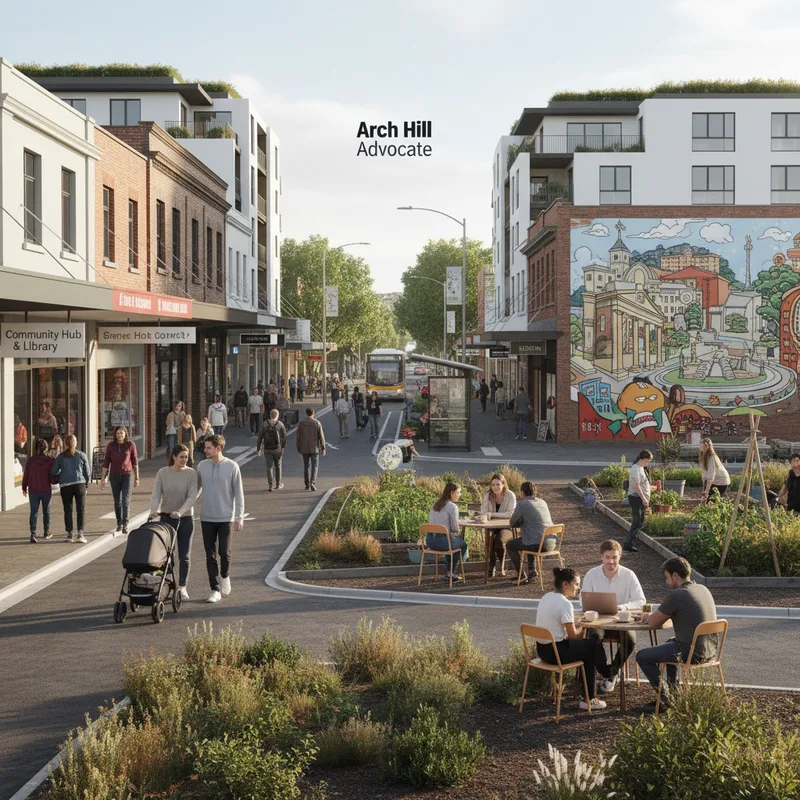
In 2026, the vibe is best described as quietly urban. You’ll hear birds in the reserve, and you’ll also hear the city, buses on Great North Road, and the motorway hum. You’re not living in a polished village centre, you’re living in a neighbourhood that sits between other places, and uses that to its advantage.
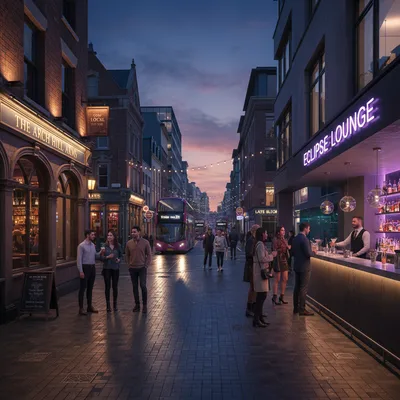
For nightlife and socialising, most locals treat Kingsland, Morningside, Eden Terrace, K Road, Grey Lynn and Ponsonby as their “extended backyard”. For a suburb-specific run-down, see our internal guide The ultimate guide to Arch Hill’s best bars and pubs (2026), and our reporting on the area’s live scene in Arch Hill buzzes with packed June live music calendar.
How walkable is Arch Hill, transport, buses and cycling
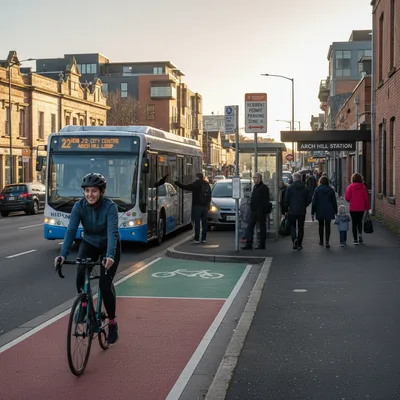
Arch Hill is highly walkable if you’re comfortable with hills. The suburb’s slopes are not subtle, and daily errands can feel like a cardio session, but the payoff is that you can walk to several adjacent hubs. Many residents also bus into town from Great North Road, or walk to nearby routes and train stations depending on which edge of the suburb they’re on.
Cycling is practical for confident riders, particularly with the growth of separated cycle infrastructure across Auckland. For the big-picture network changes and what they mean for inner-city riders, Auckland Transport and council announcements are worth tracking, along with coverage such as our piece Auckland opens two major new cycling and walking paths.
If you’re choosing a street, do a test commute at the times you would actually travel. Great North Road traffic patterns can be very different at school drop-off, peak hour and late evening, and the easiest walking route home may not be the safest or most pleasant after dark.
External authority tip: use the Auckland Transport journey planner and service updates before committing to a lease or purchase. Start at Auckland Transport (AT).
Where to shop and eat near Arch Hill (and what locals actually use)
Arch Hill doesn’t have a classic “main street” strip in the way some suburbs do, but it has excellent food within minutes, and a handful of reliable local favourites along Great North Road and nearby fringes.
- Philippe’s Chocolate, 293-295 Great North Road, is a go-to for coffee and pastries for many locals, especially those working from home. It is often mentioned as a morning routine staple. Phone (09) 376 1754.
- Newton Fish & Chippery, 270 Great North Road, is a classic quick takeaway option. Phone (09) 376 4516.
- Satya, 17 Great North Road (towards the Newton end), is well known for Indian street food, including dahi puri. Phone (09) 361 3612.
For groceries and bigger shops, most residents fan out to Grey Lynn, Kingsland, St Lukes, Mt Eden, and city fringe supermarkets depending on preference and where you can park. If you’re a car-light household, check walking distances and bus routes to your preferred supermarket before you sign anything.
For a deeper dive into the local hospitality scene and why certain venues matter to residents, our reporting on Rocky Hill sports bar cements its place as a community hub is a useful snapshot of how “third places” still shape community life here.

Parks, green spaces and the Arch Hill Scenic Reserve walks
The biggest surprise for first-timers is how green Arch Hill can feel once you slip off Great North Road into the gully. Locals talk about a “green corridor” running from Western Springs to Newton Gully, following what used to be the upper reaches of the Wai-a-te-ao river. That corridor underpins much of the area’s daily exercise and dog-walking culture.
Arch Hill Scenic Reserve has multiple access points from Bond Street, Cooper Street and Tay Street. It’s popular for walking tracks and, in recent years, mountain biking trails. If you’re renting nearby, do a weekend loop to gauge how busy it gets, and how much motorway sound carries into the bush.
Because many properties are compact, the reserve effectively becomes the neighbourhood backyard. If you have kids, it’s also a buffer, you can get a nature hit without a long drive. If you’re sensitive to noise, stand in your prospective backyard at 7am and again at 9pm, sound behaves differently in the gully.
Schools and childcare in and around Arch Hill
School zones can be a decisive factor for families moving into Arch Hill, and they can change over time. Locals regularly mention Newton Central School as a drawcard. A New Zealand Herald profile of an Arch Hill family described Newton Central Primary as a vibrant, multicultural school with strong environmental learning, including vegetable gardens and beehives.
Before you sign a lease or go unconditional, check zoning eligibility and enrolment details directly with the Ministry of Education and the schools. Our local explainer Arch Hill school guide: zones, reviews and choosing the righ covers the practical questions families ask, and for the wider context across the city, see the Auckland Tribune’s ultimate guide to Auckland school zones (2026).
Childcare options tend to be dotted around the inner west and city fringe rather than concentrated in Arch Hill itself. The best approach is to shortlist centres within a 10 to 15 minute radius of your likely commute route, then get on waitlists early.
Housing in Arch Hill, villas, cottages, apartments, and what to look for
Arch Hill’s housing stock is a major part of its charm and its compromise. You’ll see early 1900s cottages and villas on small sections, many renovated, extended, or reconfigured for modern family life. There are also pockets of light industrial buildings and apartments closer to the ridge and Great North Road.
Real estate commentary over the past decade has pointed to the suburb’s relative value compared with neighbouring Grey Lynn, with a similar inner-city lifestyle but typically a lower entry point due in part to the mix of apartments and smaller sites. An NZ Herald property report noted that the area’s narrow, hilly streets can be difficult to navigate, a point that matters if you own a large vehicle, need trades access for renovations, or rely on frequent deliveries.
What to check at inspections:
- Noise and aspect, south-facing homes towards the motorway can be darker and noisier.
- Parking reality, ask exactly how many off-street parks are on title, and how shared driveways are managed.
- Moisture and drainage, older timber homes on slopes can have underfloor damp issues.
- Renovation quality, villas may look beautiful but vary hugely in insulation, wiring and consent history.
If you’re renting, ask about heat pump performance and winter sun. If you’re buying, budget for bringing an older home up to Healthy Homes standards even if it’s already compliant, comfort improvements still cost money.
For fitness and wellbeing options nearby, including studios and gyms many Arch Hill residents use, see The ultimate guide to gyms, yoga and fitness studios in Arch.
Pros and cons of living in Arch Hill (honest trade-offs)
Pros
- Inner-city access without the constant bustle, you can be close to everything while living on quieter residential streets.
- Community culture, shared driveways and short streets often translate into neighbourliness.
- Green space on your doorstep, the Arch Hill Scenic Reserve and Newton Gully corridor are a daily asset.
- Character housing, cottages and villas with genuine Auckland heritage feel.
Cons
- Motorway noise, particularly for properties backing onto the gully.
- Hills and narrow streets, challenging for prams, mobility needs, and larger vehicles.
- Parking pressure, on-street competition is real, especially evenings and weekends.
- Retail and traffic impacts, Great North Road developments can shift local conditions quickly.
On balance, Arch Hill rewards people who live locally, walk often, and embrace the quirks of older inner-city housing. If you want flat streets, wide driveways, and silence at night, this is likely not your suburb.
One last practical tip before you commit: spend time on the exact street you’re considering at three points, weekday morning peak, weekday evening, and a weekend afternoon. Listen for motorway sound, watch parking turnover, and see how the neighbourhood actually functions.