
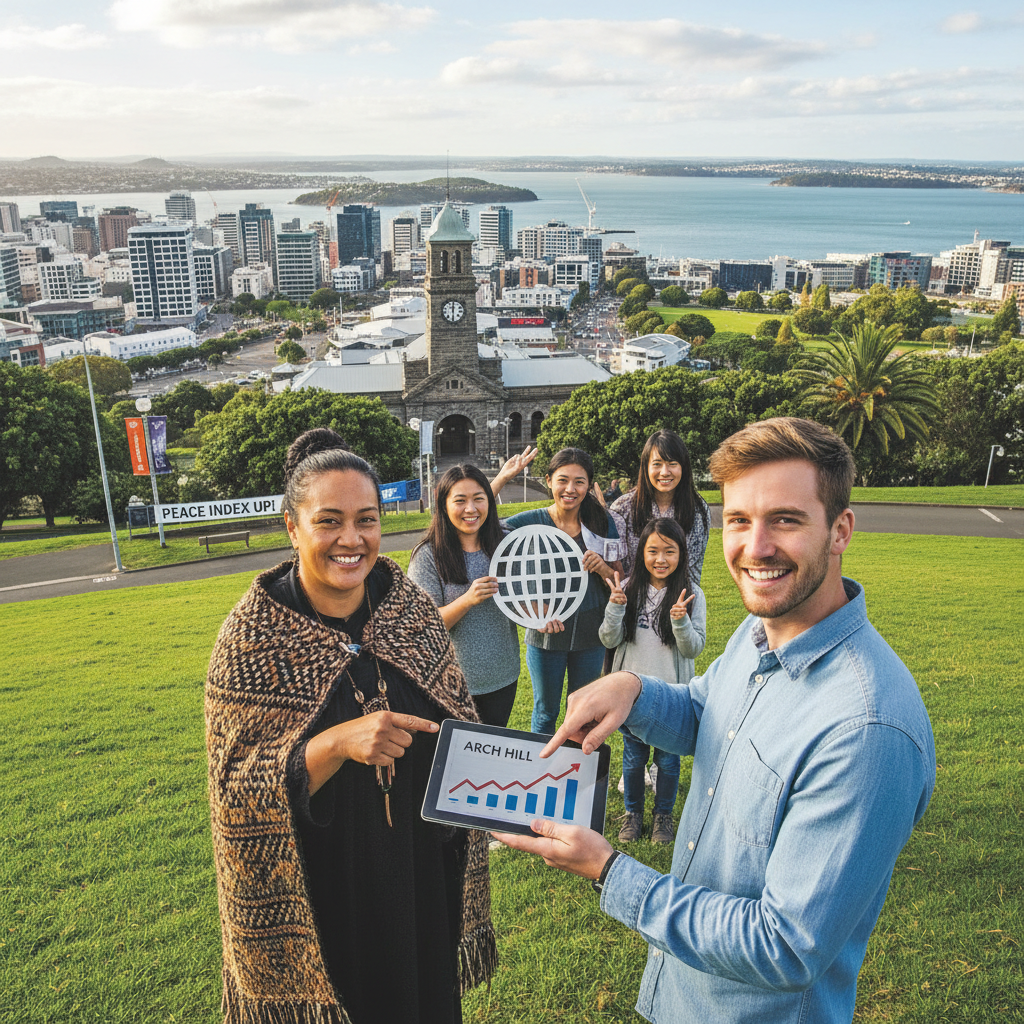
New Zealand has climbed to second place in the 2026 Global Peace Index, making it the safest country in the Asia-Pacific region and second only to Iceland worldwide. The achievement comes as the world has become less peaceful overall for the 12th consecutive year, with more active conflicts now than at any point since the Second World War.
The annual index, created by the Institute for Economics & Peace, ranks 163 nations on 23 indicators, including military spending, homicide rates, and involvement in ongoing conflict. This year, 99 countries saw their peacefulness deteriorate. Steve Killelea, the institute's founder, noted that despite this "catastrophic drop", the countries at the top of the list have remained remarkably stable.
"Even though we had this catastrophic drop, it hasn't really affected the countries at the top," Mr Killelea says.
A culture of calm
New Zealand moved up from third place in 2025, an improvement attributed largely to a drop in weapons imports. The nation continues to be recognised as one of the world's least militarised countries, with a low score for ongoing conflict.
According to Warwick Woodley, a New Zealand citizen and founder of NZ Golden Visa, the country's remote location is a significant factor in its stability. "Being this far from everywhere means New Zealand has largely avoided the geopolitical mess that drags other nations into conflict," he says. He also points to a national character that is "generally more interested in getting on with things than stirring the pot". He adds that a strong sense of community and mutual responsibility contributes to the feeling of safety. "That sense of accountability goes a long way in a country of five million, where anonymity is harder to come by," Mr Woodley says. A similar spirit of community is celebrated in local initiatives where Special Olympics athletes mentor South Auckland youth.
The ingredients of a peaceful nation
The nations topping the peace index share several common traits: well-functioning institutions, high levels of social trust, good relationships with neighbours, and a high quality of life. Iceland, which has held the top spot for 19 consecutive years, credits its success to a deep commitment to gender equality, strong public services, and renewable energy.
Switzerland, which rose to third place this year, demonstrates how social cohesion can create a foundation of trust. Cornelia Choe, a Geneva-based author, says small, daily interactions reinforce a feeling of security. She recalls losing her wallet twice, only to have it returned with cash intact the first time, and her credit card cancelled by a helpful stranger the second time. "Those are small moments, but they leave a lasting impression," she says.
Perhaps that's what peace ultimately is: not the absence of differences, but a shared commitment to finding ways to live well with them.
Mr Woodley says this lifestyle is a defining feature of the country. "Mountains, beaches and bush walks are all within reach depending on where you are," he says. "Life doesn't feel like it's constantly running away from you the way it does in some of the bigger, busier countries."
Peace as a conscious choice
For countries like fifth-ranked Ireland, a history of conflict has fostered a deep appreciation for peace. Didi Ronan, founder of a hotel in West Cork, says Ireland's past "makes its people acutely aware of the perils of prejudice and the importance of being generous and welcoming to others." She says the country’s neutrality in foreign wars provides a sense of calm "in a time of global volatility and uncertainty".
This sentiment resonates in New Zealand, where the feeling of safety is seen not just as a geographic blessing but as a privilege earned through conscious social and political choices. The full Global Peace Index report highlights that the most peaceful nations invest heavily in the structures that maintain stability.
As the world grapples with growing instability, the consistent peacefulness of nations like New Zealand offers a model built on community, trust, and a commitment to resolving differences without conflict. Ms Choe’s reflection on Swiss society speaks to a universal truth that applies equally in the South Pacific: peace is not a passive state, but an active, shared pursuit of living well together.