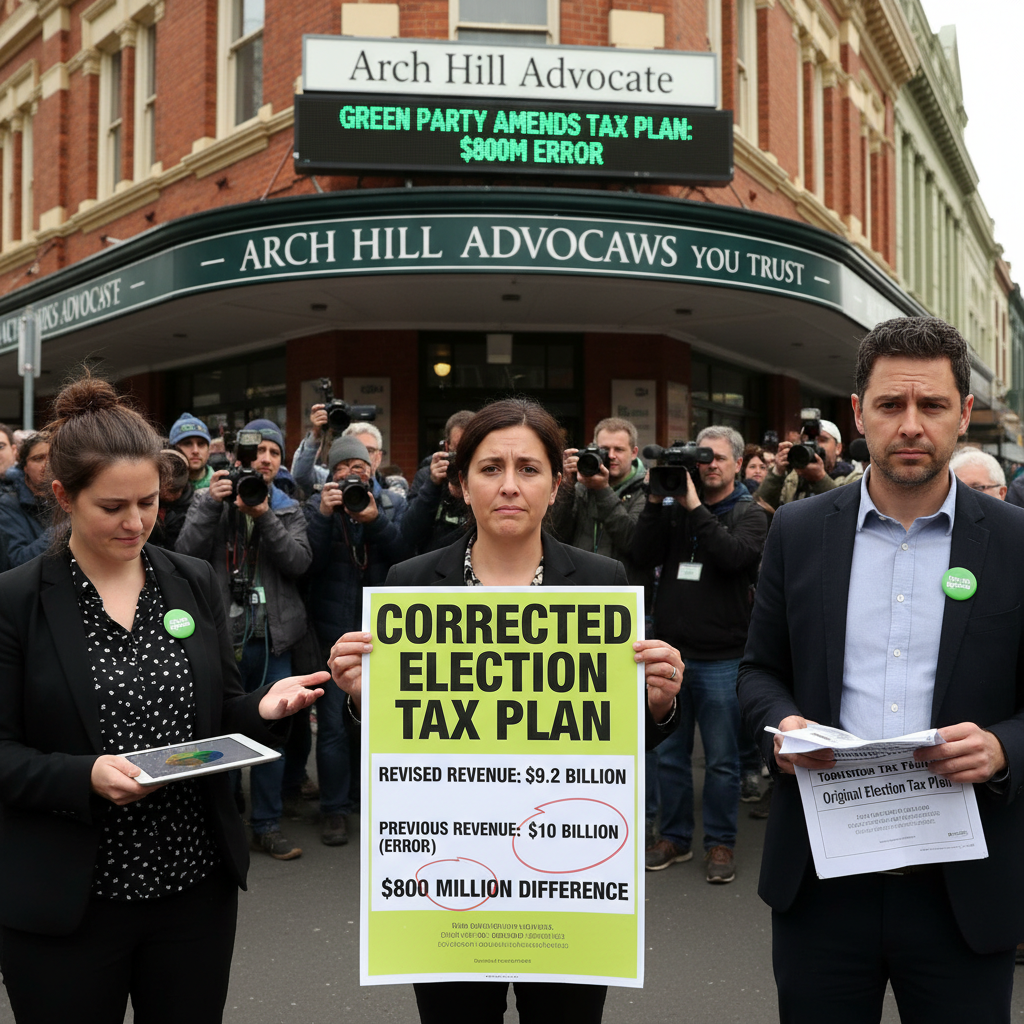
The Green Party has admitted to a significant $800 million error in its flagship election tax plan, forcing it to quietly correct the policy just months out from the November general election. The party acknowledged the mistake had overstated the amount of revenue its proposed tax changes would generate.
The embarrassing miscalculation represents a major setback for the Greens, whose electoral success often hinges on its reputation for detailed, well-costed policies. The error has been rectified, but it leaves the party open to attacks on its economic credibility at a critical time in the election cycle. The party did not release specific details about the source of the accounting error but confirmed the bottom-line impact was an overstatement of approximately $800 million.
This correction means the party’s associated spending commitments were based on flawed revenue projections. Consequently, the Greens will either need to find alternative funding sources, scale back their spending promises, or adjust other parts of their economic platform to ensure their budget balances. The admission comes as economic management shapes up to be a central battleground for the election.
Political implications of the error
The timing of the revelation could not be worse for the party. With New Zealanders heading to the polls in November, any perception of economic incompetence can be politically damaging. The error provides significant ammunition for opposition parties, who will likely use it to question the Greens' fitness to manage the country's finances.
According to a recent political poll, the left bloc would still form the next government, but support for the two major parties has fallen to a 30-year low, indicating a volatile and uncertain electorate. In this environment, the Greens’ mistake could deter swing voters and damage the standing of the entire progressive bloc, which relies on the Greens as a key coalition partner.
Instead of a public announcement, the party opted to quietly fix the numbers on its policy documents. This approach suggests a desire to minimise political fallout and avoid drawing further attention to the mistake. However, the correction was quickly identified, leading to questions about transparency and accountability within the party’s policy development process.
A tough economic backdrop
The error has been exposed against a backdrop of increasing economic anxiety for many New Zealand households. A recent report from the New Zealand Institute of Economic Research (NZIER) warned the nation’s economic recovery has been knocked off course by the global fuel crisis. The institute noted that households should brace for a difficult period, making debates over government spending and taxation particularly sensitive. This economic uncertainty is reflected in the Auckland city centre lights up for Matariki festival, where spending on public events is a key economic driver.
This challenging economic environment, further complicated by a falling New Zealand dollar, puts all parties’ fiscal plans under intense scrutiny. Political promises are being weighed against a complex fiscal outlook, and any mathematical errors, especially one of this magnitude, can severely undermine a party's message. The incident highlights the immense pressure on political parties to present credible, fully-costed plans that can withstand rigorous analysis.
The Green Party’s fiscal stumble stands in stark contrast to the recent messaging from the opposition National Party, which has put economic management at the forefront of its campaign. National recently used its party conference to announce it would make KiwiSaver compulsory for all workers if elected, a move designed to portray the party as focused on long-term financial security and responsible planning. The Greens' error inadvertently plays into National’s narrative that its rivals are not prepared for economic governance.
Corrected plan now public
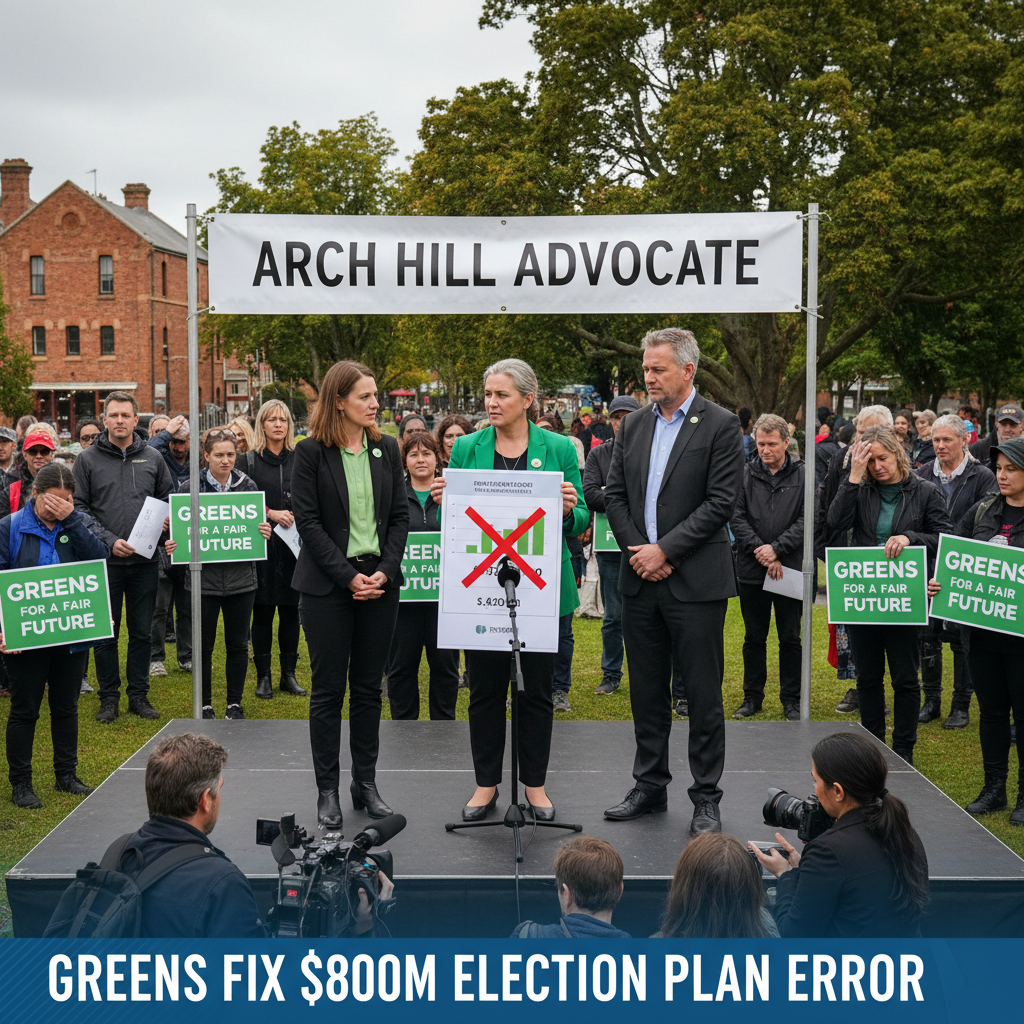
The Green Party must now campaign on its revised figures. This will likely involve difficult conversations about which spending plans may need to be adjusted or abandoned as a result of the $800 million revenue shortfall. The party’s leaders and finance spokespeople will face a tough task reassuring voters that the error was an isolated incident and not indicative of a wider problem within their policy-making process.
Responsibility for the blunder has not been publicly assigned to any specific individuals within the party. The focus, at least externally, seems to be on moving past the error and refocusing the public's attention on the substance of its policies, which typically include proposals on environmental protection, social equity, and climate action. The Arch Hill area, known for its engaged and progressive-leaning voter base, will be watching the party's next steps closely.
With the corrected tax plan now in the public domain, the Greens will face continued scrutiny from economists, political opponents, and the media. How the party navigates this challenge and communicates its revised vision will be critical to its performance at the ballot box in November.