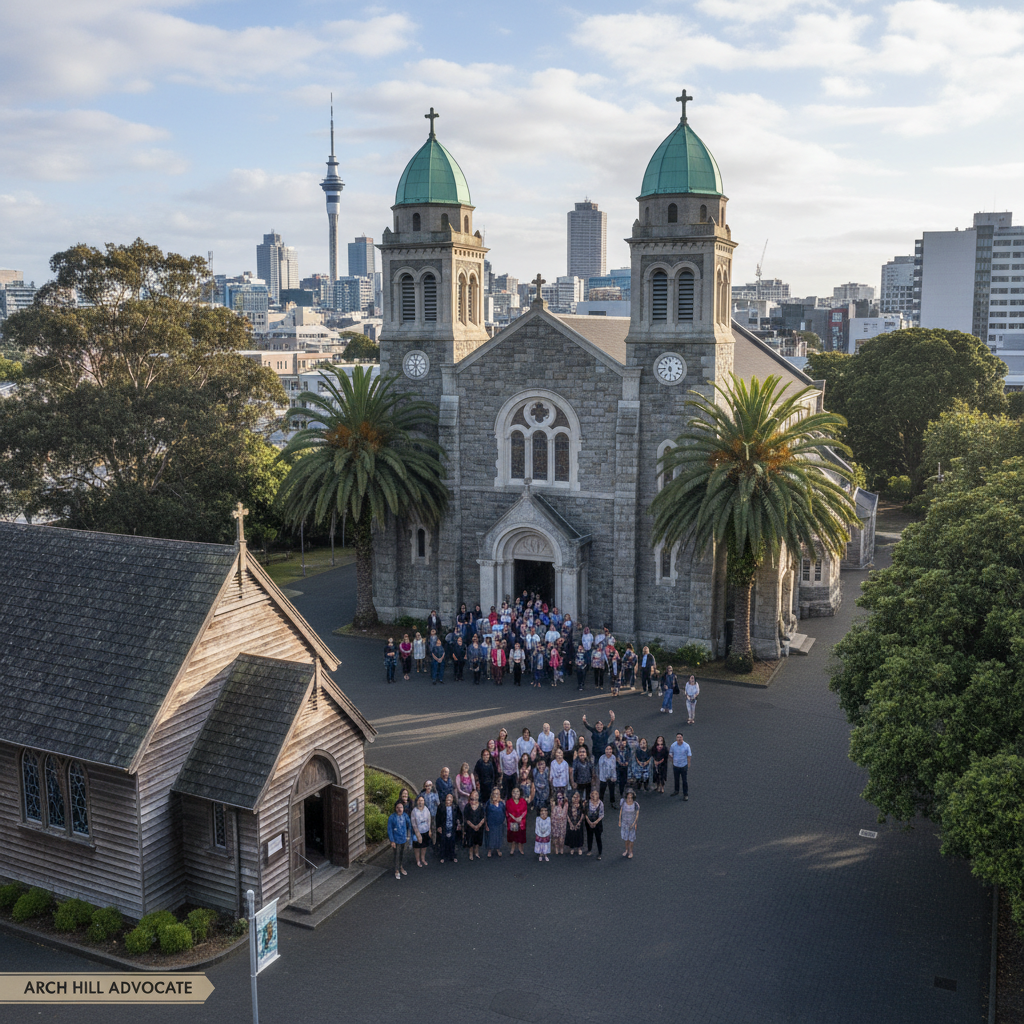
St Benedict’s Parish, an enduring spiritual and community landmark in central Auckland, continues a legacy of service that stretches back more than 150 years. From its humble origins as a small wooden chapel in 1866, the parish has grown and adapted, mirroring the development of the city itself and serving as a vital hub for a diverse congregation in its Eden Terrace location.
Today, St Benedict's is a thriving centre for worship and community life, welcoming people to "Worship, Share and Learn". Its regular services and community-specific masses underscore its continuing importance as a gathering place for Catholics from many backgrounds across Auckland.
From mortuary chapel to parish
The origins of St Benedict’s trace back to the mid-19th century, a period of significant growth for colonial Auckland. In 1866, the prominent Catholic leader Bishop Jean-Baptiste Pompallier blessed and opened a small wooden church named St Francis de Sales on what was then known as East Street. Bishop Pompallier was the first Roman Catholic bishop in New Zealand and a key figure in establishing the Catholic Church in the country.
This original chapel was primarily intended to serve as a mortuary chapel for the nearby Catholic cemetery. However, it also functioned as an outpost of the main cathedral, providing essential services to the growing number of Catholic families living in the industrial and residential area of Newton. For nearly two decades, this modest wooden building was the heart of the local Catholic community, witnessing the area's steady expansion.
As Auckland’s population boomed towards the end of the 19th century, the need for a larger and more permanent church became undeniable. The small chapel could no longer accommodate the burgeoning congregation, prompting a significant change in the structure and leadership of the local Catholic community. This pressure for expansion set the stage for a new chapter in the church's history.
The arrival of the Benedictines
The turning point for the Newton parish came in 1879 with the arrival of Benedictine monks from St Augustine's Abbey in Ramsgate, England. The Benedictine order, with its long tradition of scholarship, prayer and community building, was entrusted with the leadership of the newly created parish of Newton. This move marked a formal recognition of the area’s importance and the need for a dedicated pastoral presence.
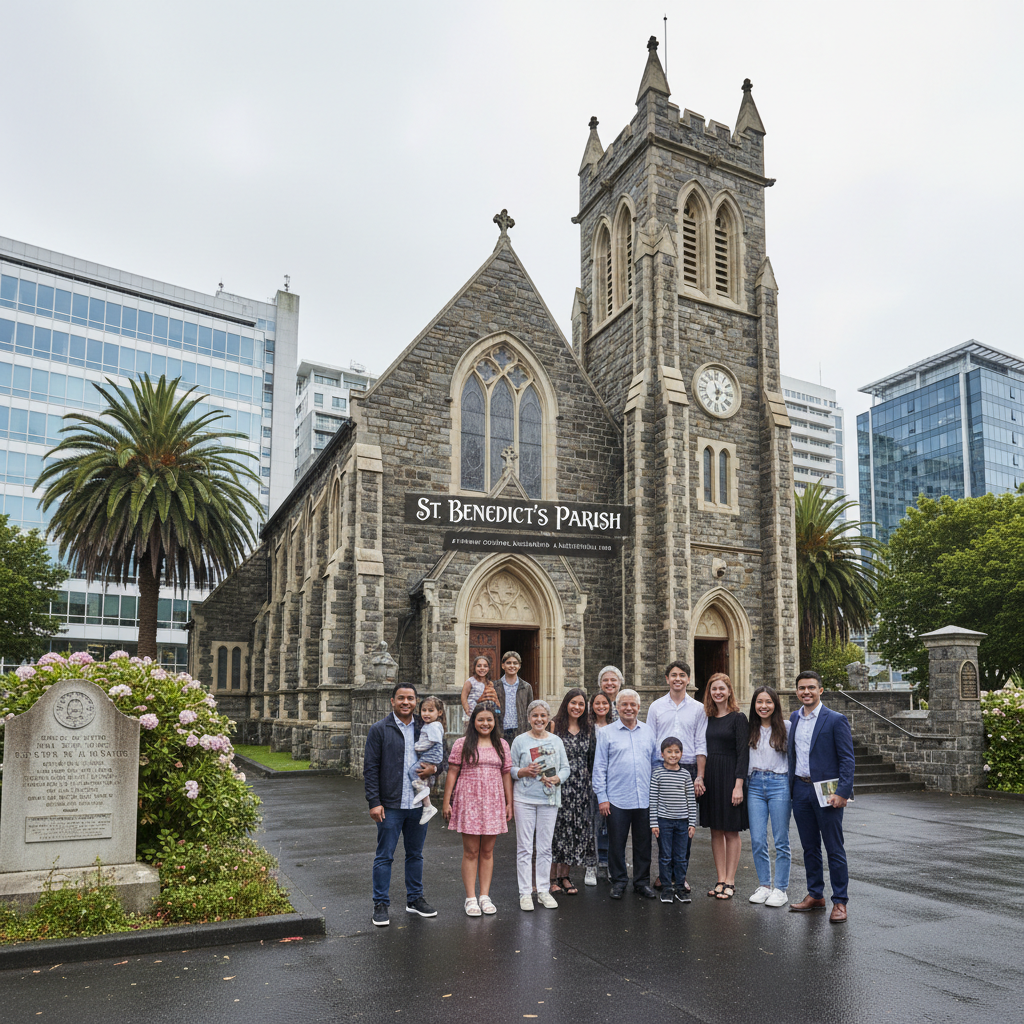
The arrival of the monks heralded a new era of development and growth. They were tasked with establishing a formal parish structure and, most importantly, overseeing the construction of a new church capable of serving the community for generations to come. Their influence shaped the identity of the parish, which was renamed St Benedict’s in honour of the founder of their order.
While the original source material does not specify the construction date of the current stone church that stands on St Benedict's Street today, its impressive architecture is a profound legacy of this Benedictine leadership. The building itself reflects the permanence and stability the monks brought to the parish, transforming it from a simple outpost into a cornerstone of Catholic life in Auckland that still stands today.
A multicultural hub in modern Auckland
St Benedict’s has evolved from its European roots to become a vibrant, multicultural parish that reflects the diverse fabric of contemporary Auckland. The church actively caters to its varied congregation by offering services in different languages and for specific ethnic communities, a testament to its inclusive mission.
In addition to its regular weekend and weekday masses, St Benedict's hosts dedicated services for several of Auckland’s migrant communities. The Filipino community is particularly active, with a regular Wednesday evening mass and services on the first and third Friday of each month, as well as a dedicated mass every Sunday morning held by the Auckland Filipino Catholic chaplaincy (ACFC). Furthermore, the parish schedule includes monthly masses for the Tongan and Indonesian communities, held on the third and fourth Sundays of the month respectively. This provision of culturally specific services highlights the church's role not just as a place of worship, but as a cultural home for those who have made Auckland their own. It ensures that new New Zealanders can connect with their faith in a familiar language and cultural context, a vital service for community integration and well-being. For many families, access to local services, including schools and places of worship, is a key part of building a life in a new area. The role of institutions like St Benedict's is a crucial part of this process, which can sometimes be complex as shown in guides to finding and choosing local healthcare. In areas like Chinatown, as noted in Chinatown community co-working efforts, local groups also foster community connection through various events.
Community life and future
Located at 1 St Benedict’s Street in Eden Terrace, the parish remains a busy hub of activity. General mass times are held on Saturday evenings and Sunday mornings, with weekday masses from Wednesday to Friday at lunchtime to accommodate those working in the city fringe suburbs of Newton, Grafton and Eden Terrace.
The parish also makes its facilities available for significant life events such as weddings, reunions and other celebrations, positioning itself as a central venue for the wider community. This long history of serving the community places it among the city's most significant historical institutions.
In an effort to remain connected with its congregation in the digital age, St Benedict’s maintains an active online presence through its website and regular newsletters. As the parish continues to serve its diverse community, it stands as a living link to Auckland’s past and a dynamic contributor to its multicultural present and future. The church is scheduled to continue its full range of community masses throughout 2026.