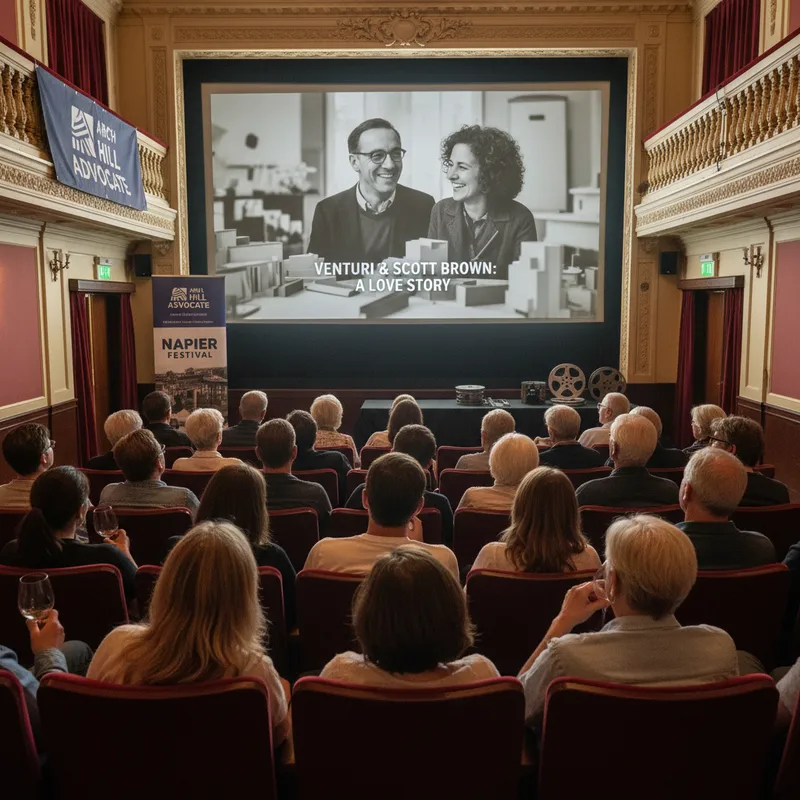
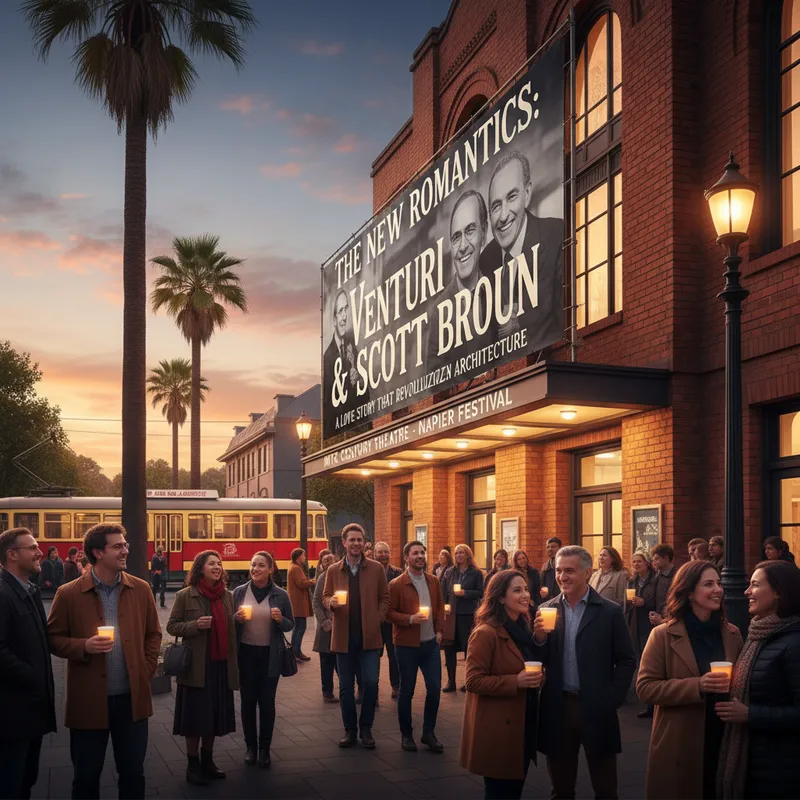
A feature documentary celebrating the remarkable 50-year creative partnership and love story of two of the most influential architects of the twentieth century is screening in Napier this month. 'Stardust: A Story of Love and Architecture' will be shown at the MTG Century Theatre on May 17 as part of the Resene Architecture & Design Film Festival.
The film chronicles the lives of Robert Venturi and Denise Scott Brown, a visionary couple who ignited a quiet revolution in the architectural world. Directed by their son, Jim Venturi, alongside Anita Naughton, the documentary offers an intimate journey into their uncompromising creative world, a life marked by deep affection, sharp intellect, and a shared passion for their craft.
For decades, Venturi and Scott Brown challenged the rigid, austere doctrines of modernism that dominated post-war architecture. While modernists preached 'form follows function' and a universal, unadorned style, the duo found inspiration in the messy, vibrant and often chaotic visual language of the everyday landscape. Their work argued for an architecture that embraced complexity, symbolism, and even humour, forever changing how we think about the buildings and cities we inhabit.
A new way of seeing
Venturi and Scott Brown are perhaps best known for their groundbreaking 1972 book, 'Learning from Las Vegas'. The work, which elevated the commercial-vernacular architecture of the Las Vegas Strip to a subject of serious academic study, was initially met with scorn from the architectural establishment. They argued that the neon signs, vast parking lots, and themed casinos of the city were a valid and vital form of communication, a 'decorated shed' that modernism had failed to appreciate.
This philosophy championed the idea that buildings should communicate their purpose through signs and symbols, rather than through their structural form alone. This was a radical departure from the modernist belief that a building's structure should be its own ornament. Their ideas laid the groundwork for Postmodernism in architecture, a movement that reintroduced historical references, colour, and ornament into building design, influencing the look of cities around the globe.
Their impact can be seen in projects ranging from the Sainsbury Wing of the National Gallery in London to the Seattle Art Museum. Locally, their design philosophy resonates with ongoing discussions about creating more people-focused urban environments and the push for a more design-led approach to construction in New Zealand.
A partnership of equals
The documentary 'Stardust' is not just an exploration of architectural theory, it is also a poignant love story. It delves into the 50-year marriage and collaborative partnership that was central to their success. The film is a journey across continents and decades, weaving together archival footage, interviews, and a deep-dive into their shared projects.
However, their partnership was also a site of struggle against the entrenched sexism of the industry. In 1991, Robert Venturi was awarded the Pritzker Architecture Prize, the profession's highest honour. Despite the fact their work had been fully collaborative for decades, Scott Brown was not included. Venturi himself protested the decision, stating he could not accept it alone, but the committee held firm. The incident became a major catalyst for discussions about gender inequality in architecture, a conversation that continues today.
The Pritzker committee has since acknowledged the need for change, but the 1991 decision remains a significant point in architectural history. The film shines a light on Scott Brown's immense contribution and the challenges she faced, re-centering her as an equal creative force. Exploring such histories is central to understanding the built environment, similar to how events like Open Christchurch encourage public engagement with architecture.
The festival continues
The screening of 'Stardust' is a highlight of the Napier leg of the Resene Architecture & Design Film Festival, an annual event that brings a curated selection of films on architecture and design to city centres across New Zealand. The festival provides a platform for professionals, students, and the public to engage with the ideas and personalities shaping the built environment.
The choice of the MTG Century Theatre, a key cultural institution in Hawke's Bay, underscores the significance of the event. Beyond this screening, the festival continues to offer compelling cinematic experiences for those interested in the nexus of art and history.
Following the architectural focus of 'Stardust', the theatre will also host a screening of 'Exhibition on Screen: Caravaggio', offering art lovers a deep dive into the life and work of the Italian master. These events collectively enrich the cultural landscape of Napier, providing residents with world-class documentary content on their doorstep.