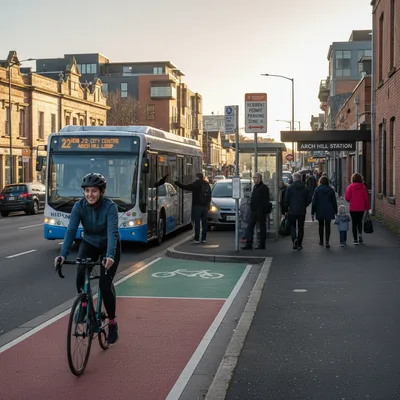

Parents moving into Arch Hill, or weighing up a move, quickly learn the same thing locals do, school choices shape day-to-day life here. A ten minute walk can decide whether you are in zone for a highly sought-after primary, whether your teenager has a straight-through pathway to a nearby secondary, or whether you will be relying on buses, before-school care, and out-of-zone ballots.
This 2026 guide is designed for parents and prospective residents who want clear, local information about zoning, school quality indicators, and realistic options, including state, state-integrated, and private. It focuses on the schools most commonly used by Arch Hill families, plus a handful of strong alternatives in neighbouring suburbs. Because enrolment zones and policies can change, treat this as a starting point, then confirm with each school and the Ministry of Education.
How school zoning works in Arch Hill, and how to check your address
Most state and state-integrated schools in central Auckland operate enrolment schemes, commonly called zones. If you live inside the zone, your child is entitled to enrol. If you live outside, you may still be able to apply, but you are competing for limited places, usually via a ballot and priority order.
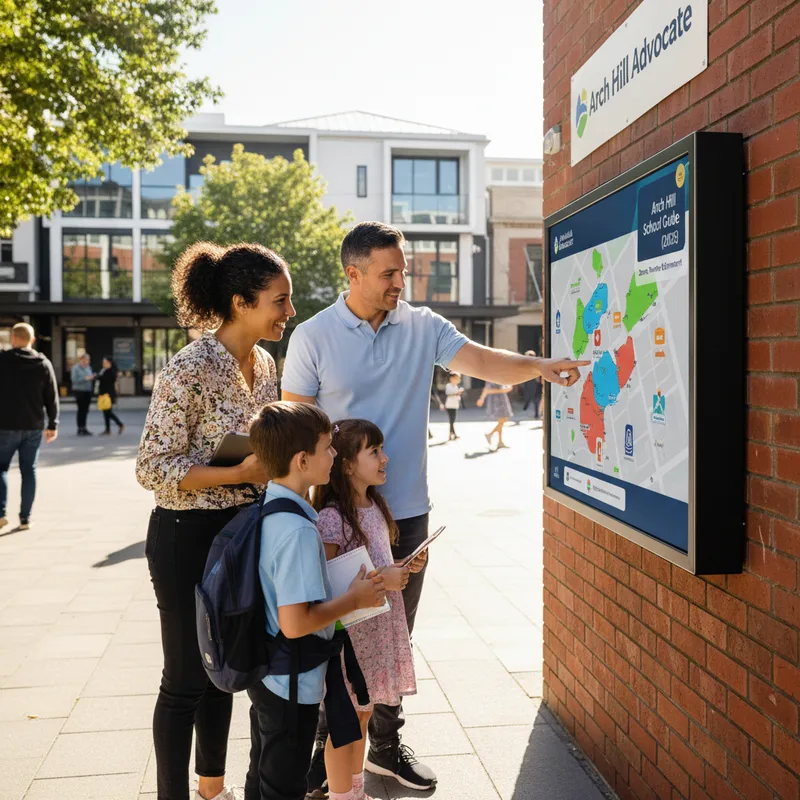
What families should do first: check the school’s current enrolment zone map using the Ministry of Education tool, then cross-check with the school office. The authoritative starting point is the Ministry’s “Find a school” information via Education Counts and school websites. Zoning can be redrawn when rolls surge, or when new housing comes online.
Practical tip for prospective buyers and renters: if you are choosing a property based on a zone, confirm the exact address, not just the street. In central suburbs, the zone line can cut across a road, or even split a block.
What counts as proof of in-zone? Schools commonly ask for evidence such as a tenancy agreement, sale and purchase agreement, utility bill, and sometimes statutory declarations. If you are building or renovating, ask early what documents the school will accept and when.
Out-of-zone basics: Out-of-zone places are typically offered after in-zone applicants and after priority groups set by legislation, such as siblings of current students. Each school publishes its own deadlines and ballot dates. Put calendar reminders in early, many central schools close applications well before term start.
External authority link: The Ministry of Education explains enrolment schemes and parents’ rights here: education.govt.nz, enrolment schemes.
Best primary schools near Arch Hill for in-zone families
Arch Hill sits between Grey Lynn, Kingsland, Eden Terrace and Mt Albert, so “local” can mean several different primary schools depending on which side of the ridge you live on. Rather than ranking schools, we have focused on what parents most often ask about: culture, learning support, community, and practicalities like after-school care and traffic at pick-up.
- Grey Lynn School, Grey Lynn, is a common choice for families on the western side of Arch Hill. Known locally for a strong community vibe and active PTA. Check the school website for the current enrolment zone and enrolment dates.
- Edendale School, Mt Eden, is often considered by families on the southern edge of Arch Hill and Eden Terrace. It is a long-established central school with a diverse roll. Confirm zoning street by street, as boundaries are tight in this area.
- Mt Albert Primary School, Mt Albert, can be an option for families closer to New North Road and the Mt Albert side. Travel routes and safe crossings matter here, especially for younger children.
Hours and costs: Most state primary schools run roughly 9am to 3pm, with optional paid before and after-school care run by third-party providers or school-linked programmes. Expect fees that vary by provider and days used. Ask each school office for the current provider, weekly cost, and holiday programme details.
What “quality” means in NZ now: ERO (Education Review Office) reports are still a key public signal, but they no longer use the old National Standards-style comparisons. Instead, look for evidence of strong curriculum delivery, wellbeing systems, learning support, and progress for priority learners. Read the school’s most recent ERO profile and board reports to see what is improving and what is still being worked on.
Families juggling school runs with work often plan routes around safe cycling and walking infrastructure. Our local coverage of new paths is a useful read if active travel is part of your school decision: Auckland opens two major new cycling and walking paths.
Best intermediate and middle school options around Arch Hill (Years 7 to 8)
Intermediate is where Arch Hill parents start thinking a few years ahead. The biggest question is whether your child thrives in a stand-alone intermediate, or whether you prefer a school with a longer pathway, such as a Year 1 to 8 full primary, or a Year 7 to 13 composite in the private or integrated sector.
Auckland Normal Intermediate (Epsom) is one of the region’s best-known intermediates and is frequently on the list for central families, but zoning and demand are key. If you are out of zone, you will need to understand ballot timing, and you should be realistic about the chances in high demand years.
Remuera Intermediate is another popular intermediate for some central Auckland families, again with a strong reputation and demand pressures.
Composite alternatives: Some parents prefer a Year 1 to 8 setting, or a Year 7 to 13 setting, to reduce transitions. In central Auckland, that may mean considering state-integrated or private options, or looking for a full primary that keeps children through Year 8.
Practical detail: For intermediates, check the school’s co-curricular offerings (music, languages, technology), the learning support model, and how they handle the big shift in organisation and homework. Ask about device expectations and BYOD costs if applicable.
Best secondary schools for Arch Hill teenagers (state, integrated and private)
Secondary schooling is where zoning intersects with long-term pathways, NCEA results, subject choice, and wellbeing systems. For Arch Hill families, the most commonly discussed options include large central state schools, plus state-integrated and private schools accessed by application and fees rather than zone alone.
Western Springs College (Years 9 to 13) is a major state secondary that many central-west families look at. Enrolment scheme boundaries matter, particularly as nearby housing intensifies. If you are considering a move, check the current zone map and confirm with the school.
Mt Albert Grammar School (Years 9 to 13) is another big state option within reach of Arch Hill by bus, cycle, or car. Like other high-demand schools, zoning is a real factor.
Auckland Grammar School and Epsom Girls Grammar School are often considered by families closer to the city side of Arch Hill, depending on zoning and preferences. These schools have long histories and strong academic reputations, but they are also large, which is a positive for subject range and co-curricular breadth.
Private and integrated options: For families considering private schooling, King’s College is one of Auckland’s best-known independent schools. It is located at Golf Avenue, Ōtāhuhu, Auckland 1062, and operates as a day and boarding school (Years 9 to 13). Official website: kingscollege.school.nz. Fees vary by year level and boarding status, so contact admissions for current 2026 schedules and timelines.
In the wider region, some families also consider large integrated schools such as KingsWay School on the North Shore corridor, especially if work and family networks are aligned there. Official site: kingsway.school.nz.
Practical detail: If you are comparing secondary schools, ask about NCEA subject availability (including languages and technology), extension pathways, trades academies, learning support and neurodiversity support, and how pastoral care is structured. For teenagers, commute time and independence often matter as much as academic profile.
How to compare school quality in 2026 (ERO reports, NCEA data and what locals actually look for)
“Best school” means different things for different whānau. In Arch Hill, parents often weigh up culture and belonging, learning support, and how well the school communicates, alongside academics.
Use ERO reports wisely: ERO reports are public, but read them like a narrative rather than a score. Look for: how the school uses assessment, how they support learners who need extension or extra help, and whether they have strong internal evaluation (how they measure what is working).
Check student achievement information: For secondary, NCEA information and school leaver outcomes can provide context, but they are influenced by student intake and subject mix. If a school offers a wide range of pathways, raw NCEA pass rates may not tell the full story.
Visit on an ordinary day: Open nights matter, but a daytime tour can tell you about noise levels, transitions between classes, and how teachers interact with students. Ask to see where students eat, what the library feels like at lunchtime, and how the school handles phones.
Talk to other parents, but filter the noise: Local Facebook groups and playground conversations can be useful for practicalities like after-school care and traffic, but they can also amplify one-off experiences. Cross-check with ERO and what you see on site.
Housing decisions and school decisions are closely linked in central Auckland, especially as more multi-unit housing arrives. For context on how people are planning around homes and space, see: Aucklanders can add bedroom for $50,000 expert says.
Out-of-zone enrolments, ballots and realistic strategies for Arch Hill families
If you are out of zone for your preferred school, you are not automatically out of luck. But you do need a plan.
Strategy 1: Apply early, and apply broadly. Put in applications for your preferred school, plus at least one back-up you are comfortable with. Central Auckland ballots can be unpredictable year to year depending on cohort size.
Strategy 2: Understand priority categories. Many schools prioritise siblings of current students, then siblings of former students, then children of staff, then other applicants. Read the enrolment scheme carefully so you know where you stand.
Strategy 3: Plan your transport. If you are relying on a school outside walking distance, test the route at school start and finish times. Consider whether your child can realistically cycle or bus independently by Year 7 or Year 9.
Strategy 4: Consider the transition points. Some families focus on getting into their preferred secondary, then choose a primary or intermediate that sets their child up socially and academically, rather than chasing a single “perfect” school from Year 1.
Local note: intensification and new apartment developments can change demand. If you are buying into a new build, factor in that rolls can surge quickly, and zones may tighten. Our coverage of local development gives a sense of how fast the area is changing: Ockham lists final four Greenhouse apartments at 20 Williamson.
Early learning and childcare in Arch Hill (kindergartens and preschools)
For many families, the school search starts before school. Arch Hill has several early learning services that regularly come up in local parent recommendations, particularly for families wanting a kindergarten model or a centre close to work and school routes.
According to Education Counts “Find an Early Learning Service in Arch Hill”, local options include:
- Grey Lynn Kindergarten, Grey Lynn. See profile and contact details via Education Counts: educationcounts.govt.nz.
- Kindercare Learning Centres, Grey Lynn. Education Counts listing: educationcounts.govt.nz.
- The Toy Maker's Cottage Preschool. Education Counts listing: educationcounts.govt.nz.
Practical detail: For ECE, ask about ratios, teacher qualifications, the centre’s approach to settling children, and whether they offer 20 Hours ECE and what fees remain. Waiting lists can be real in central suburbs, so tour early if you are planning a move.
Choosing the right school when you are moving to Arch Hill: a local checklist
When families move into Arch Hill, the “best” option usually comes down to fit. Here is a checklist locals use to cut through the noise.
- Confirm the zone first, using the school’s zone map and the Ministry information.
- Visit twice, once at an open event, once during a normal day.
- Ask about learning support, including literacy interventions and neurodiversity support.
- Check device and uniform costs, including sports fees and camps.
- Map the commute at peak times, including wet-weather options.
- Look at after-school care, holiday programmes, and enrolment deadlines.
- Think ahead to intermediate and secondary pathways, not just next year.
If you are new to the area, it can also help to get a feel for neighbourhood life beyond the school gate. Our local dining guide is one way to start exploring: 10 best restaurants for dinner in Arch Hill, Auckland.
Cross-site link: For a wider look at how councils’ funding decisions can affect services families rely on, including community facilities, see: Wellington councils raise rates despite new water charges.
Final word: The right school is usually the one that matches your child, your whānau values, and your daily logistics. Arch Hill’s central location gives families more options than many suburbs, but it also means more competition. Start early, confirm your zoning, and make sure your plan works on a rainy Tuesday, not just on paper.